I want specialist stroke therapy & rehabilitation now
I want specialist speech and language therapy now
I'm a trainer or therapist wanting to qualify in stroke rehabilitation
We are on Facebook

Could more of your brain have been saved after your stroke? There's now a machine available that can literally hoover the clot straight out of a blocked artery!
This astonishing new machine is called THUNDERBOLT and it's for ischaemic strokes, ie the ones where a big clot blocks a major artery to the brain and every minute counts.. Its been made by Penumbra in California, and the American FDA cleared it for stroke back in June.. and it's also got a European CE mark.
You already know there are two ways to get a clot out; a little mesh 'stent retriever' that grabs it, or steady suction that draws it out. THUNDERBOLT is the suction sort, but the difference is what it does with that suction. Instead of one constant pull, a computer (Penumbra's 'Engine') pulses the vacuum, flicking between a deep vacuum and normal pressure to, in effect, wear the clot down and break its grip on the vessel wall. And it does this very fast; up to 12 times a second!
Pressure sensors let it tell the difference between clot and flowing blood, so it knows when it's actually onto the clot and drags the whole thing into the catheter in one go, rather than the surgeon having to work it loose bit by bit.
Penumbra call the three steps detect, fatigue, ingest, and the whole point is a cleaner, more complete grab, first pass. With around 1.9 million brain cells lost every minute that artery stays blocked, that speed and completeness could mean far far less damage done. We think this is an amazing concept!
A caveat I noticed however in their own literature; they say it 'may' clear clots more completely and 'could' improve outcomes, which obvs isn't the same as being proven to beat what we've already got. Anyway, what do you think about it? Let us know in the comments below 😉
ARNI Stroke Rehab & Recovery says: the faster and cleaner a clot comes out, the better. And also the golden rules of stroke don't change; know the signs and call 999 the second you spot them, because with stroke, we say time is brain… 😉
www.arni.co.uk
#ARNIStrokeRehab #Thrombectomy #StrokeTreatment #StrokeAwareness #TimeIsBrain

Approximately 40% of stroke survivors experience this difficulty: to comprehend or produce spoken or written language caused by a cerebrovascular accident. In half of these cases the language impairment still persists one year post-stroke. Aphasia has wide-ranging effects on the ability to function and quality of life of stroke survivors and easily leads to social isolation.
If you need help, ARNI SLT Telerehab can now help YOU, right now, wherever you are in the world!
The latest evidence shows clearly that you can conquer aphasia very successfully with the help of speech and language therapy.
And it also shows that SLT Telerehab is just as effective as in-person, face to face treatment.
We have a team of highly experienced low-cost specialist SLTs (all post-grads from Universities such as UCL, the University of Cape Town etc) who are available to help you right now, in your home, via Zoom. You get a one to one hourly service, based around your diary needs, from the comfort of your own home, with a highly experienced specialist speech and language therapist. Please enquire to arni.uk.com/get-remote-speech-language-help-now/ !
#Aphasia #StrokeSurvivors #strokerecovery #strokerehabilitation #strokerehab #aphasiaawareness #neurorehabilitation #arni #exerciseafterstroke #strokeexercise #strokerecoveryexercises #neuroplasticity #ARNIstrokerehab
www.arni.co.uk
Studies have concluded that arm cycling is a useful tool for rehabilitation. They found that muscle force and the range of active movement (shoulder flexion, shoulder abduction, elbow flexion and elbow extension) can be increased significantly.
Have you tried an arm cycle?
www.arni.co.uk
#strokerehab #strokerecovery #neuroplasticity #strokerehabilitation #ARNIstrokerehab #NeuroRehab #strokeexercise #strokearmrehab
Precio necesito una
Yes at cardiac rehab. Handles hard to hold without extra Velcro straps. Hands fall off and get bruised
Your own hard work and determination... ...plus a trained ARNI instructor is the MOST POWERFUL WAY (backed by clinical research) to regain that precious gift of strength and mobility.
Call us on 0203 053 0111 or email support@arni.uk.com to find out if there's an instructor who can help you.
www.arni.co.u#neuroplasticityi#strokeexerciser#NeuroRehabr#strokerecoveryo#strokerehabilitationa#strokerehabr#ARNIstrokerehabrehab
The rowing stroke, when using an indoor rower, is about 65-75% leg work and 25-35% upper body work. Each rowing stroke involves compression and extension of the legs and is working the muscles of the calves, thighs, hamstrings. buttocks and hips, shoulders, back, arms and hands as well as the 'core' abdominal muscles. And because it engages so many muscle groups simultaneously. rowing gets the heart rate up nicely, pumping oxygen-rich blood around the system in readiness for exertion.
www.arni.co.uk
If you like this post then please share it with others. Each time that you share a post, you can directly help other people – as who knows which people in the world might find us and gain, either directly from the charity or simply by being able to copy an ‘innovative and useful’ move/trick of the trade that might help them manage after stroke.
Every time you share, you could directly help someone – as knowledge is power 😉
#strokeexercise #strokerecovery #neurorehab #strokerehabilitation #neuroplasticity #strokesurvivors #strokerehab #ARNIstrokerehab
Exercise: Knees-Up. This technique is rather like the seated marching exercise. And we are talking one legged balance here, which also works the hip flexors hard This is also great training for coping with walking up inclines. You should be trying to reach a good height with your knee. Try hard to match the heights on both knees. You may be unable to bring your bad foot even a few inches from the floor, but I promise you that as you work at it, you will get better and better at it.
Find out more about this exercise in The Successful Stroke Survivor book by Tom Balchin.
www.arni.co.uk
#strokerehab #neuroplasticity #strokerecovery #strokerehabilitation #NeuroRehab #ARNIstrokerehab #strokeexercise #ARNIstrokerehab
How does ARNI work? The system has been refined over a period of over20years with stroke survivors of varying ages, type and severity of stroke… and of time from injury.
With your trainer, the application of individual trial and error is required in order to see what can be done using the specialised ARNI rehabilitation exercises and strategies… and to understand what goals can be reached. All training given will be appropriate to the individual, even though you may be working in a group class.
With your trainer, the application of individual trial and error is required in order to see what can be done using the specialised ARNI techniques and to understand what goals can be reached. You need to be working ‘on the edges’ of your current ability to stimulate maximum neuroplasticity.
This is YOU DOING it. This is you using your plastic brain and incrementally regaining action control 😉
www.arni.co.uk
Call us on 0203 053 0111 or email support@arni.uk.com
#strokerehab #arnistrokerehab #strokeexercise #arnistrokecharity #strokerecovery #neuroplasticity #neurorehab #strokerehabilitation #arnistroke
You should be aiming to start challenging yourself at least 10 to 20 times every day with do-able, simple ‘tester tasks’ around the house with your affected hand if you have upper limb spasticity and/or flaccidity. These need to be as varied as reaching for, holding and switching on an alarm clock, to pulling up and putting down a lavatory seat. When starting out, please don’t do potentially dangerous tasks like opening the oven with it or close a car door – we do not want you to damage your arm or hand, but challenge it. If you feel brave, try the risky stuff, but there are loads of things that you can do to increase action control of your hand without hurting yourself.
www.arni.co.uk
#strokerecovery #arnistrokerehab #neuroplasticity #strokerehab #neurorehab #strokerehabilitation #strokeexercise #ARNIstrokerehab
Not only can cardiovascular exercise increase the number of connections in your brain and improve your road to recovery, it can do so while creating a healthier cardiovascular system. Exercise also generates a boost of crucial neurochemicals in the brain as well as affecting the autonomic nervous system (ANS).
Read more about this in this previous blog on this topic: arni.uk.com/how-to-do-cardio-after-stroke/
#strokerehab #NeuroRehab #strokerehabilitation #strokerecovery #neuroplasticity #strokeexercise #strokerecovery #strokerecoveryexercises #exerciseafterstroke
The brain is working hard to heal itself after a stroke. Continue with your rehab exercises and don’t compare your stroke recovery to others’. And most importantly: never give up.
www.arni.co.uk
#neurorehab #neuroplasticity #arnistrokerehab #strokeexercise #strokerehabilitation #strokerecovery #strokerehab
This is timely encouragement. Harry Taylor and I have been working relentlessly on recovery exercises since his stroke in June 2023 and tbh we are tired. He had a fall in the kitchen yesterday, fell backwards. Luckily no injury but emotionally it slayed him, made him feel utterly useless and that he's not advancing. But hey, he's just got up and in time for today's exercise routine. None of this is in any way easy and I'm 75 next month. Harry's 66. 💪
This is great advice for younger stroke victims. As someone in the autumn of my life, I can't afford to be too patient because if after tedious and time-consuming repetitions I'm finally able to ditch that cane at age 95, what does it matter? I could have gone on a round-the-world cruise, albeit in my wheelchair.
I'm struggling just now..... There's just no respite - ever.... Fingers curling, toes curling, overused right shoulder and wrist.... People say rest or take it easy but if I don't move I feel worse physically and emotionally.... I'm just so tired and it's *only* 2 years 🥺
My Cross, My Faith, and My Trust in Jesus ✝️🙏
On April 24, 2024, my life changed completely when I suffered a stroke. Since that day, I have been carrying a cross that I never chose and never expected to carry. My right hand and right leg have not returned to the way they were before, and the journey has been long and difficult.
But I have come to believe that when we carry our cross, Jesus is not standing far away watching us carry it alone. He is carrying it with us.
Perhaps through this suffering, Jesus is teaching me something deeper—something that cannot be learned through an easy life. He is teaching me the meaning of sacrifice, patience, humility, forgiveness, compassion, and true love.
He teaches us not to hate anyone, even those who may hurt us or become our enemies. He asks us to forgive, to love, and to pray for them. This is not always easy. But perhaps this is part of the true meaning of carrying our cross: learning to keep love in our hearts even when life gives us reasons to become bitter.
For more than two years, I have continued to fight, to rehabilitate, to hope, and to believe. There have been difficult days, but I refuse to let suffering destroy my faith.
I don't know how many years I will have to carry this cross. I don't know what tomorrow will bring. But I know one thing:
I am not carrying it alone. Jesus is carrying it with me.
And if one day He decides that my hand will open again, that my fingers will move normally, that my foot will become stronger, or that I will walk more naturally, I will thank Him with all my heart.
And if the journey takes longer than I wish, I will still trust Him.
Because my faith is not based only on receiving the miracle I am praying for. My faith is based on believing in His love, His mercy, His wisdom, and His presence beside me.
Jesus carried the cross for us. Today, I carry my cross with Him.
I will continue to believe.
I will continue to forgive.
I will continue to love.
I will continue to hope.
And I will never stop trusting God.
In God we trust. 🙏✝️❤️
Jesus, carry my cross with me, give me strength when I am weak, peace when I am afraid, patience when I am tired, and hope when the road seems too long.
Amen. 🙏✝️
NEW! GET YOUR COPY OF NEW BOOK BY TOM BALCHIN LEARN HOW TO RECOVER OPTIMALLY
CLICK HERE
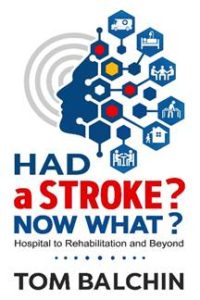 Whether you had your stroke a week or 20 years ago, this seriously practical book reveals everything you need to know about for real-life, evidence-based long-term recovery from limitations caused by stroke, that you can actually understand, use and apply successfully for yourself. With 244 pages of new information and material, it’s stacked with revelations for you based on the neuro-rehabilitation evidence-base.
The ARNI Blog
-
Computer Used To Say No, Now AI Says No!
September 1, 2026
-
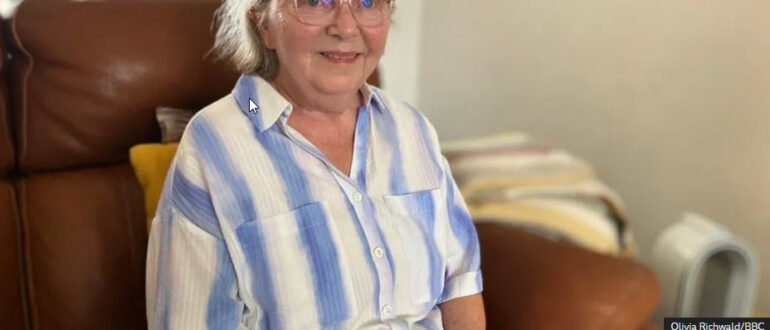
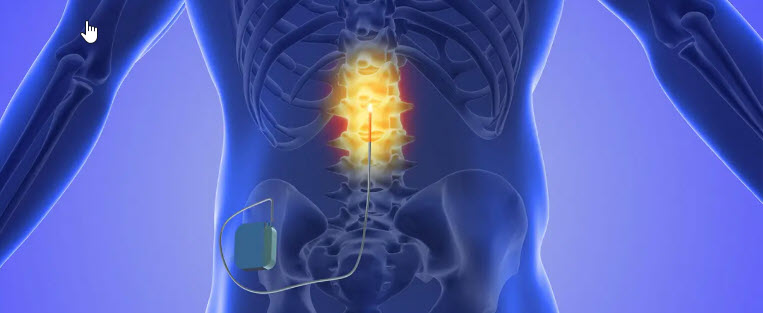
Restoring Upper Limb Control via Spinal Cord Stimulation
August 11, 2026
-
Stroke Recovery With a 90’s-style Video Game!
August 10, 2026
-
Gel Packing Which Could Repair Stroke Damage
August 7, 2026
View Comments
Likes:
0
Shares:
1
Comments:
0