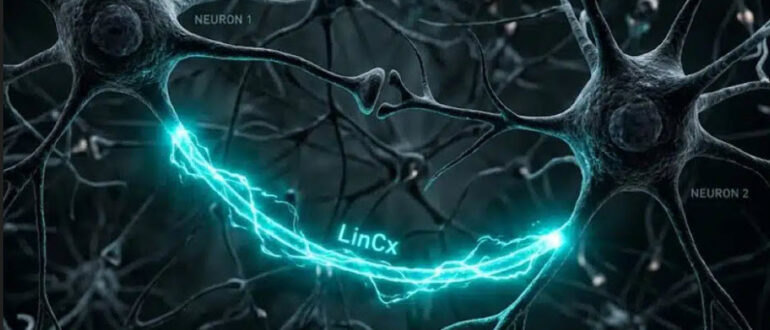

Researchers at Duke University School of Medicine have published findings in Nature describing a technology called LinCx that may have direct relevance to stroke survivors.The basic idea is this: if a brain connection is damaged, instead of trying to fix it or medicate around it, you build a new electrical path between the neurons that need to talk to each other. Like dealing with a road closure, LinCx creates a working detour with a biological ‘wire” designed to bypass broken or disrupted brain connections.
Stroke frequently does not kill every neuron in the affected area; what it does in many cases is sever the connections between neurons that remain alive and present. Those disconnected cells can no longer communicate reliably – and it is that loss of communication, rather than simple cell death, that also underlies persisting problems after stroke: like fatigue, low mood, cognitive difficulty etc. LinCx, led by Kafui Dzirasa at Duke, does not attempt to repair damaged synapses; instead it builds a new electrical ‘bypass’ between specific neurons, restoring signal transmission without altering the brain’s existing connections.
The system uses proteins originally identified in fish, where they function naturally as electrical synapses. The Duke team engineered these proteins to bond only with matching modified partners, preventing interaction with the brain’s natural proteins and avoiding unintended connections elsewhere. Earlier attempts to exploit electrical synapses in research settings frequently produced connections in unintended locations; LinCx addresses this through a lock and key mechanism in which each engineered protein recognises only its designated partner. Where current treatments – antiepileptic drugs, antidepressants, electrical stimulation devices – act across broad areas of neural tissue, LinCx targets selected neurons only. In animal testing, the added connections strengthened communication in specific circuits, altered brain-wide activity patterns, and produced measurable behavioural changes related to stress responses and social interaction across two different species.
The implications for stroke survivors are worth considering: post-stroke epilepsy, affecting approximately one in ten survivors, arises from disordered electrical activity in damaged circuits; current treatment suppresses symptoms pharmacologically without addressing the underlying disruption. Post-stroke depression, which affects around a third of survivors, involves significant circuit level dysfunction in the connections between the prefrontal cortex and subcortical mood regulation structures – connections that medication restores only partially. Cognitive impairment, spasticity and post-stroke fatigue similarly reflect disrupted circuit communication rather than simply lost tissue; and in each case a technology capable of restoring specific connections rather than broadly modulating the nervous system.
LinCx remains at the animal research stage. Dzirasa has indicated that the next step is establishing whether the technology can override synaptic deficits caused by lifelong genetic disruptions – still considerably short of human trials. The UK regulatory pathway through the MHRA, encompassing safety, tolerability and efficacy phases, typically requires ten to twenty years for a novel biological technology. The research is funded by the Howard Hughes Medical Institute, the National Institutes of Health, the Burroughs Wellcome Fund and the Hartwell Foundation. Routine NHS availability before the late 2030s is unlikely; the 2040s is a more grounded estimate.