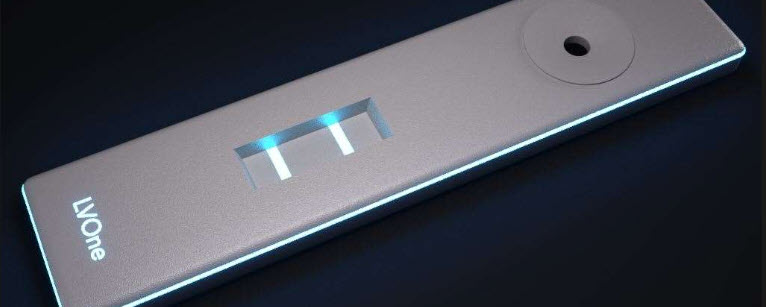

A blood test designed to identify large vessel occlusion stroke in the back of an ambulance has received UKCA marking and is now being deployed with London Ambulance Service. Large vessel occlusion, or LVO, is the most severe form of ischaemic stroke; it occurs when a major artery supplying the brain is blocked by a large clot, and the only effective treatment is mechanical thrombectomy. Paramedics really have had no reliable way of identifying LVO in the field; so patients have to therefore be taken to the nearest hospital rather than the nearest thrombectomy centre, losing time that can’t be recovered. LVOne, developed by Upfront Diagnostics over eight years with support from the University of Cambridge, Newcastle University, Innovate UK and the National Institute for Health and Care Research, is designed to help close that gap.
The test works from a finger-prick blood sample and delivers results in under ten minutes, measuring two biomarkers: D-dimer, associated with clot formation, and GFAP, associated with bleeding in the brain. The first deployment equips approximately 280 London Ambulance Service vehicles covering a population of roughly 6.5 million people; paramedics will combine LVOne with existing assessment tools to determine whether patients should go directly to one of London’s Hyper Acute Stroke Units. The programme is led by ARNI supporter and kind (past) presenter on ARNI courses, Dr Robert Simister, who is a consultant neurologist at the National Hospital for Neurology and Neurosurgery at UCLH. Brain tissue dies at approximately 1.9 million neurons per minute in LVO stroke; getting the right patients to the right hospital faster directly reduces the severity of the damage that rehabilitation then has to address. Given that LVOne is already in active NHS use, wider national rollout within two to three years is plausible if the London pilot data supports it.
Mechanical thrombectomy has rapidly become one of the most effective interventions of ALL in stroke, when performed quickly; studies consistently show that for every hour of delay, the chance of a good outcome falls by roughly 20 per cent. Yet across the UK, access remains uneven – provision outside major urban centres is limited, and many patients who would benefit never receive it at all. LVOne does not solve the access problem on its own, but accurate prehospital identification of LVO is a necessary precondition for any serious improvement in thrombectomy rates; you cannot route patients to the right centre if you don’t know which patients need to go there. The UKCA marking also means that other ambulance services across the UK can now adopt the test without waiting for further regulatory approval – and pressure from us in the stroke community for that to happen quickly is probably entirely justified!
ARNI Stroke Rehab & Recovery says: this is one of the most practically significant developments in prehospital stroke care in years, with real potential to get patients to the right treatment faster than anything previously available in the field; and the case for rapid national rollout beyond London is really strong.



One Comment
My husband had a stroke. Over 5 years ago
Left side. Compromised within left side total blockage of left side artery
Not had Much. Success with. Recovery
I like to read about. New. Things that. Can. Be achievable for some