
If you have had a lacunar stroke, you probably have been told it was caused by fatty plaque narrowing your arteries, and put on aspirin or another antiplatelet drug to prevent the next one. New research from the University of Edinburgh, published in the journal Circulation in July 2026, suggests that picture may be wrong; the strongest link was not with narrowed arteries at all, but with the widening and enlargement of the small blood vessels deep within the brain. This helps explain why the standard drugs you may be taking have often had limited success at preventing this particular kind of stroke.
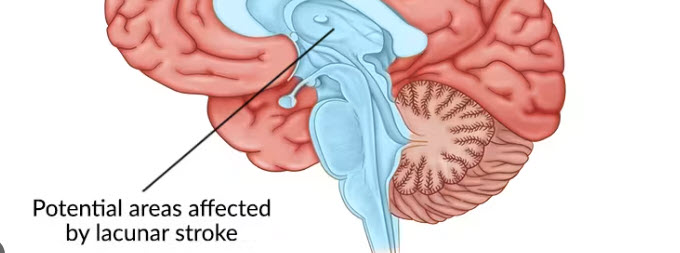
Lacunar stroke happens when the brain’s tiniest blood vessels are damaged by a condition called small vessel disease. It is a major cause of disability and is linked to cognitive decline, dementia and a raised risk of further strokes; but until now, no one has been able to pin down exactly what drives it, which of course has made it hard to treat properly. To investigate, researchers from the University of Edinburgh, the UK Dementia Research Institute and international collaborators studied 229 people who had had either a lacunar stroke or a mild non-lacunar stroke. Each had clinical and cognitive assessments and MRI brain scans shortly after their stroke and again a year later, so the team could track the type of stroke, monitor the small vessel disease, and spot any new brain damage that developed over the year.
The results turned the usual assumption on its head. Narrowing of the larger arteries was not associated with lacunar stroke or with small vessel disease at all; it was more common in other forms of stroke, but it did not predict new brain damage on the follow-up scans. Artery widening was the opposite story. Patients with enlarged, widened arteries were more than four times more likely to have had a lacunar stroke… and the widening was also linked to more severe small vessel disease, faster progression of brain damage, and a greater chance of developing new ‘silent’ strokes… small areas of brain injury that happen without obvious symptoms. More than one in four participants developed these silent strokes during the study, even though they were taking the standard treatments meant to prevent them.
As Joanna Wardlaw, Professor of Applied Neuroimaging at the University of Edinburgh, puts it: ‘this study provides strong evidence that lacunar stroke is not caused by fatty blockage of larger arteries, but by disease of the small vessels within the brain itself… it explains why conventional treatments like antiplatelet drugs are not as effective for this type of stroke and highlights the urgent need to develop new therapies that target the underlying microvascular damage’. The point is not that aspirin is useless, but that for lacunar stroke it may have been aimed at the wrong target all along.
The research is already feeding into new treatment strategies. The LACunar Intervention Trial 3 (LACI-3) is testing whether existing medicines, including cilostazol and isosorbide mononitrate, can protect the brain’s small vessels, lower the risk of further strokes, and reduce long-term problems with memory, mobility and dementia after lacunar stroke. These drugs are already licensed for other uses, which could shorten the path to routine prescription if the trials succeed; but LACI-3 needs to report and be reviewed before anything changes in standard care, so realistic NHS use for lacunar stroke is still a few years away.