What if sound waves could help your brain reconnect after stroke? Well, if your gait control is still bad, your coordination unreliable and or your arm not doing what you ask of it, the reason (as you know) is almost always because the cortical networks that once coordinated those movements have been disrupted, and the brain is struggling to reroute communication across damaged circuits. But maybe low-intensity transcranial ultrasound stimulation (TUS) could be the next ‘big thing’ after FES?
Interesting to read a study just published in the Journal of Neuroscience, led by Yi Yuan at Yanshan University, which used low-intensity transcranial ultrasound stimulation (TUS) in a mouse model of ischaemic stroke over one week and found that TUS improved gait and restored communication between cortical brain networks, with those network improvements directly linked to measurable behavioural gains. What makes this study notable beyond the results is that it begins to explain the mechanism not just how TUS works on motor function after stroke, but how; by restoring cortical network connectivity in the damaged area, it allows the brain to resume the inter-regional communication that coordinated movement requires.
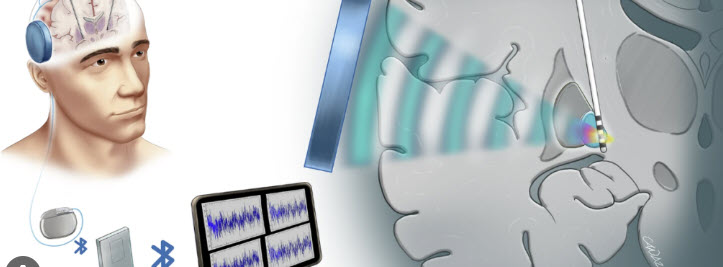
TUS delivers focused sound waves through the skull to targeted brain regions without electrodes, implants, surgery or drugs. The skull is no barrier; low-intensity ultrasound passes through it and reaches the target area directly, which gives TUS greater spatial precision and deeper reach than transcranial magnetic stimulation or transcranial direct current stimulation. A systematic review covering 5 human studies and 13 animal studies found TUS effective in supporting stroke recovery, particularly motor function; and a phase one trial published in the Journal of NeuroEngineering and Rehabilitation in March 2026, recruiting ten subacute stroke patients, demonstrated safety and preliminary efficacy of focused TUS for upper limb motor recovery.
For stroke survivors with persistent motor difficulties, the mechanism TUS targets is directly relevant to what rehabilitation is also trying to achieve. Coordinated movement depends not on any single brain area but on communication between multiple cortical regions working in sequence; stroke disrupts those sequences at the network level, which is why motor recovery can plateau even when a survivor is working hard in rehabilitation. A technology that restores inter-regional cortical communication rather than simply stimulating peripheral muscles or applying broad electrical fields addresses the problem closer to its source, and research published in 2024 has also shown that very low-intensity ultrasound facilitates glymphatic clearance in the brain, connecting TUS to the same waste-clearing system whose role in stroke recovery has been highlighted by recent circadian rhythm research.
Realistically, routine clinical availability is several years away; larger randomised controlled trials are needed and optimal stimulation parameters (frequency, intensity, duration and target site) are still being established across different stroke presentations.. At ARNI, the ARNI Instructors and I work on motor coordination, gait and upper limb function from the earliest stages of rehabilitation; and so a brain-level intervention that restores cortical network connectivity alongside intensive rehabilitation rather than instead of it is exactly the kind of adjunct that could extend rehab optimally…