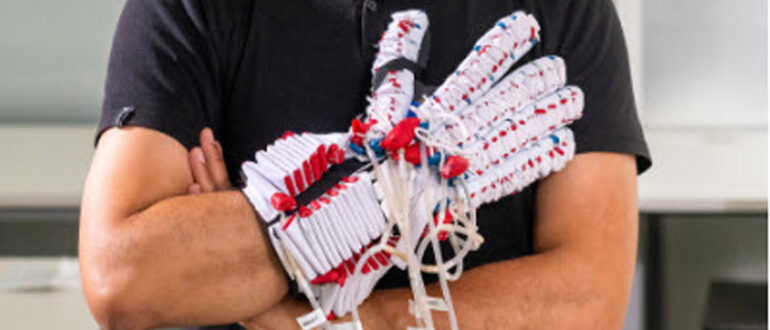
By the start of the project he had very little control of his hands but could still move the first thumb joint, so the researchers built the system around the strongest signals from his thumb muscles. Despite very weak signals, the glove recognised his intention in 9 out of 10 cases; he reached for objects, held a fork for the first time in four years, and picked up small cubes and dropped them into a container. A video game helped too… he had to make a character jump using only his thumb joint, and five minutes of this improved his ability to grasp considerably.
Two things stand out beyond the tech. The first is cost. Nassour sewed the glove himself, and the fabric costs very little; as institute director Prof Gordon Cheng puts it, ‘we’ve found a solution that anyone can afford but still works very well.’ Most upper-limb assistive robotics is expensive and confined to specialist centres, so a low-cost, home-viable device that works this reliably is unusual. The second is breadth. The team is now adapting the concept for other patients, including stroke survivors; neurologist Prof Tobias Wächter believes it can help people with flaccid paralysis more widely, including those with peripheral nerve damage from motorcycle or bicycle accidents, or patients with polyneuropathy.
This is obviously just early research, and the stroke version is still being developed rather than tested at scale – larger trials across different conditions and levels of impairment will be needed before anything reaches routine use. There is no UK availability, no regulatory approval and no confirmed timeline; realistically, routine use here is several years away. At ARNI, we work on grasp, grip and hand function from the earliest stages of recovery, and so an affordable device that reads your intention to move and then helps you complete it, at home, sounds very useful to us…