
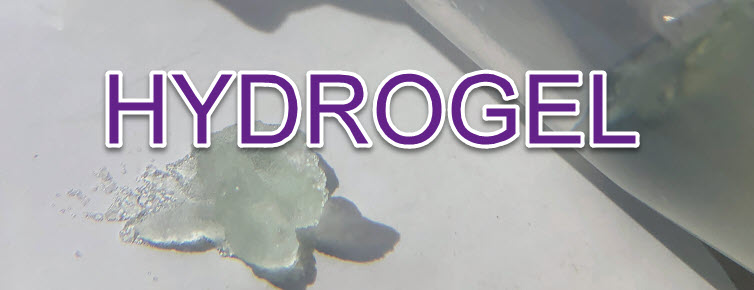

A large stroke often leaves a permanent hole in the brain. Once the dead tissue is cleared away you’re left with a cavity, and up to now that’s been seen as permanent damage that can’t be undone or resolved, with rehab as the only possible solution. But a team at Duke University, led by Professor Tatiana Segura, has been trying something different to past attempts to ‘fill the gap’; injecting a smart hydrogel into that cavity to turn it into a place where the brain can start repairing itself. Basically, the gel is injected as a liquid, then sets into a soft, sponge-like scaffold full of tiny interconnected pores. The pores give the body’s own cells somewhere to move into and start rebuilding, and the gel also softens the dense scar that normally seals off the damaged area. So instead of just filling the hole, it opens it up as a sort of building site for repair.
The scaffold also carries tiny biological ‘signal packages’ (taken from astrocytes, the brain’s star-shaped support cells) to attract the immune cells that help with healing. Injecting those signals on their own did almost nothing; they only worked when anchored into the gel, where arriving cells could find them. The results are in Cell Biomaterials (July 2026) – and it shows that the effects in mice were strong. New blood vessels grew through the cavity, fresh nerve fibres (the wiring that lets brain cells connect) appeared, and, most importantly, movement improved. Mice given the gel did much better on a walking-coordination test, and after eight weeks they were performing on a par with healthy animals. It also worked when given more than 24 hours after the stroke; well outside the tight window that clot treatments need.
The idea of filling the stroke cavity isn’t new in and of itself btw; researchers have been trying to put biomaterials into that empty space for well over a decade now. Segura’s own earlier gels (developed first at UCLA) showed back in 2017 and 2018 that an injectable hydrogel could reduce scarring and draw new blood vessels and young nerve cells into the cavity in mice. Others have tried loading similar gels with growth factors, with stem cells, or with drugs, using the scaffold as a way to hold treatment in place at the injury rather than let it wash away through the bloodstream. So the cavity as a space to build in is a fairly established line of research.. what has varied to date is the various proposals re what you put into the scaffold, and how you get the brain to respond to it.
What’s harder, and what most of these attempts have struggled with, is turning that early promise into lasting, useful movement. Plenty of methods can grow a few new blood vessels or nudge some cells to migrate; far fewer produce the coordinated rebuilding (vessels, nerve fibres and the right immune activity all together) that actually shows up as better function. That’s the part this latest work is concentrating on, and it’s why the immune-system angle is drawing interest. So, the earlier gels mostly acted as passive scaffolding… whereas this one apparantly tries to organise the repair response around it. Whether that holds up beyond mice is the open question, but it’s a reason the field keeps coming back to the cavity idea despite the slow going. This is early animal research but the idea is a hopeful one for those of us dealing with long-term damage; not restoring blood flow (too late for that), but I think preparing the old, settled injury so the body can rebuild, and giving stroke rehab trainers more to work with is a great target to work for.