Introducing ARNI Stroke Rehab UK Instructors, who are trained to use functional strategies that help stroke survivors take charge of their own recovery. There are over 140 active ARNI instructors available around the country to pair with people: this is done by calling the ARNI Stroke Rehab Charity.
Research has shown that ARNI community-based training programmes are overwhelmingly positive, helping survivors find purpose and improve function long after their formal therapy ends.
A trial a few years ago, funded by the Stroke Association down at Exeter University, also investigated an ARNI-based programme and found it to be safe and acceptable for participants. It's about getting back to real life with practical coping strategies and building resilience.
For example, survivors learn get up safely from the floor on their own after a fall; a skill that restores so much lost confidence and facilitates survivors to become independent again. It's the gatekeeper skill to learn after stroke 🙏💪💖
www.a#arnio#strokerecoveryk#rehabilitationb#neuroplasticityp#strokesurvivork#functionaltraininga#HopeAfterStrokef#communitysupportitySupport
... See MoreSee Less
Be creative. There is no excuse for NOT retraining in some way. If you want to, you will find a way. If you don't really want to you will find an excuse.
Not sure what to do? Call us on 0203 053 0111 or email support@arni.uk.com to find out if there's an ARNI trainer near you who can help you.
www.ar#strokerecoveryk#ARNIstrokerehabt#StrokeRehabt#NeuroRehabn#strokeexercisek#neuroplasticityp#strokerehabilitationbilitation
... See MoreSee Less
Prayer Finger Bends This exercise is self-explanatory: it involves working your bad hand so that a prayer-position can be assumed. This ‘matching’ of all the digits is an exercise in itself. If you haven’t tried this, which I’m sure you will have, it’s a good way for those who are perhaps training you to see immediately the action control that you currently possess. It doesn’t matter that your palms themselves may not be able to touch: approximating this position is, in itself, retraining.
Find out more in The Successful Stroke Survivor book by Tom Balchin
www.arni.co.uk
#ARNIstrokerehab #neurorehab #strokerecovery #strokerehabilitation #strokerehab #neuroplasticity #arnistrokerehab #strokeexercise
... See MoreSee Less
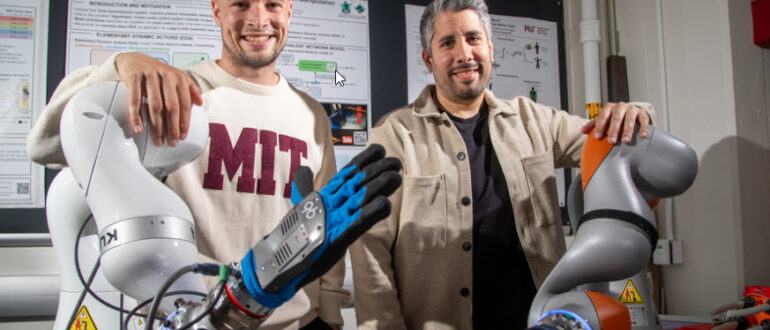
What if your stroke rehab happened in a gym down the road, not a hospital? Well, yes... that MIGHT be suitable for us at ARNI Stroke Rehab -what's your view??
I found that there IS one of these currently exists, that's run by the University of Strathclyde with NHS Lanarkshire, South Lanarkshire Council and the local Health and Social Care Partnership, and grew out of Dr Andy Kerr's technology-enriched rehab work. The gym is fitted with equipment most survivors never get near; virtual-reality treadmills, balance trainers, power-assisted machines and upper-limb systems, with games and puzzles built in to keep you engaged and working for longer.
The part I like most is that this started in the hospital, in the acute phase, right after people's strokes. What's happening at Blantyre LIFE is the next step, and to my mind the more important one; taking the same intensive, tech-driven rehab (if possible/really hapends rather than just talk..) out of the hospital and into a community gym, for people further down the line, as this is the phase, as we know, that usually falls off a cliff. You do your stint on the ward, you're discharged, and then the intensive stuff mostly stops... and you're left to get on with it.
A local gym you can keep coming back to, months or years on - and if you've not got an ARNI Instructor already - it's really the next best thing for many survivors; so seeing it trialled in the community (with sister sites in Edinburgh and Dundee too) is hopeful -
So, ARNI Stroke Rehab & Recovery says: this is the right direction; intensive, technology-backed, high-repetition practice, in the community where people actually live. It's the gap the ARNI Instructors support people with every day. More of this, please, and everywhere obviously, not just Scotland!!
www.arni.co.uk
#ARNIStrokeRehab #StrokeRecovery #StrokeRehabilitation #Neurorehabilitation #StrokeSurvivor
... See MoreSee Less
“If we put exercise into a drug, it would be one of the most effective medications to prevent vascular disease and treat patients with cardiovascular and cerebrovascular diseases including stroke.” Yep. This statement is reinforced by the finding that exercise interventions are significantly more effective than drugs in both rehabilitation and reducing the odds of mortality among stroke survivors.
Chronic inactivity related to stroke basically has a whole load of physiological consequences that result in cardiovascular deconditioning, increased cardiovascular risk and increased mortality and morbidity risk.
The majority of survivors are cardiovascularly unfit. It has been found that due to the effects of stroke, you can even be rendered half as cardiovascularly fit compared to someone who has not had a stroke.
This can be worsened by a pre-existing cardiovascular condition, such as hypertension, congestive heart failure, peripheral vascular disease, or pulmonary and metabolic diseases. This is bad news. The good news is that evidence now also suggests that your exercise train-ability may be comparable, in many ways, to that of your age-matched healthy counterparts.
Despite the fact that the energy expenditure required for you to perform walking varies with the degree of weakness, spasticity, training, and AFO usage.. and is elevated by one and a half to two times that of non-stroke subjects…you can increase your cardiovascular fitness by a magnitude that is similar to that of healthy adults who engage in endurance training programmes. Improving aerobic fitness may allow you to carry out everyday activities with less effort and for longer periods.
You’ve got to be active, right? Another crucial factor: there is growing evidence that exercise promotes brain neuroplasticity. Neuroplasticity mediates cognition and the relearning of motor skills and other skills after stroke. Brains learn what they do. Remember, the brain loves repetition. Cardiovascular exercise is repetition.
For such adaptation to happen optimally, you must be prepared to do focused work with whatever movement you possess (with some caveats, to be explained shortly), even if you believe you have none at all. Over and over again, with as much attention to detail as you can.
The take-home from this is that I want you now to think of yourself as a CREATIVE stroke survivor. Take walking. Repetitions are required but ALSO you need to set goals and targets (actually, like me, you’ll find these are fast-moving targets): to get away from supports like wheelchairs, frames and sticks as soon as possible, to go further, to go for set distances, to feel less tired each time, to ramp up the quality of your walking by focusing on how you walk, to walk over different surfaces, to walk with an AFO and without, to tackle stairs, etc. etc.
Time to make a move! Get professional help if you need or ‘go-it-alone’. If you are setting up to ‘retrain’ by yourself, when attempting walking practice, dependent on your presentation, at least collar a young and strong family member or friend to help you. No-one will mind, especially when they see you making a darned good effort. The world is yours.
www.arni.uk.com
#strokerecovery #ARNIstrokerehab #strokerehab #strokesurvivorscan #neurorehab #strokeexercise #neuroplasticity #strokerehabilitation
... See MoreSee Less
Stroke survivor Dr Tom Director of ARNI Charity UK recovering his functional grip strength using the principle of timed carry of heavy, awkward objects. To put in rehab terms, the liquid in the barrel sloshes from one end to another during each step. This was extremely HARD to complete - places the fingers on the barrel tines with a climber's grip and forces the person to hang on throughout
Is this something you've tried??
www.ar#strokerehabilitationb#ARNIstrokerehabt#StrokeRehabt#NeuroRehabn#strokerecoveryk#strokeexercisek#neuroplasticityp#strokesurvivorscanrvivorscan
... See MoreSee Less
The best thing you can do is to try to use your hand religiously for as many things as you can reasonably do every day without going insane.
If you need help to get going give us a call on 0203 053 0111, or email support@arni.uk.com to find out if there's a trainer near you who can work with you.
www.arni.co#strokeexerciser#NeuroRehabr#strokerecoveryo#neuroplasticityi#StrokeRehabr#strokerehabilitationa#ARNIstrokerehabr#strokearmrehabrehab
... See MoreSee Less
Here's a great review of Had a stroke? What now? book by Tom Balchin
This is a really great book for stroke survivors, their families, and people working in the field of stroke care. It provides very concise and accessible information about stroke and is written with positivity and optimism that should motivate anyone wishing to improve their function. It includes lots of practical strategies and exercises as well as very current information about the latest developments in the field of stroke recovery. I am currently training to help stroke survivors and I can highly recommend it!
arni.uk.com/product-category/arni-recommende#strokesurvivorscanr#NeuroRehabr#neuroplasticityi#strokerehabilitationa#StrokeRehabr#strokeexerciser#strokerecoveryo#ARNIstrokerehabrehab
... See MoreSee Less