
Peter Coghlan’s recovery story is one of the more remarkable you’ll come across. In 2011, aged just 33, this former soldier had a massive brain stem stroke and woke from a coma with locked-in syndrome; fully conscious and aware, but unable to move or speak. He could blink, and that was all. Imagine lying there, hearing people around your bed discuss a bleak future, with no way but blinking to tell them you’re still in there….
Locked-in syndrome is caused by damage to the pons, the part of the brain stem that carries nerve traffic between brain and body. Almost every voluntary muscle is paralysed, except, usually, the ones that move the eyes; so the person is awake and thinking clearly but unable to move or speak. Around 90% of people with it die within four months, and there’s still no cure, only assistive technology to help with communication.
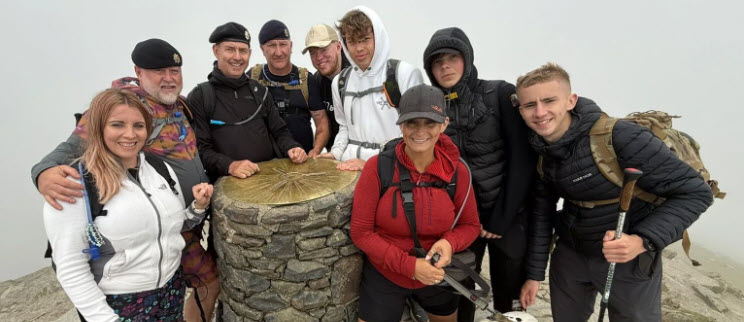
Peter actually learned to communicate letter by letter on an alphabet board, using only his eyes. His first four words, blinked out to neurologist Professor David Blacker, were: ‘can you fix me?’ Then came the work; hours every day, trying to move a finger, trying to swallow, relearning the basics most of us never think about. At times, he says, it was like a horror film. But he kept at it. Six months and one day after his stroke, Peter walked (when no-one with his condition had been known to walk independently out of a hospital ward). Since then he’s kept setting himself challenges; 7km of Perth’s City to Surf, 15km for a charity walk, and last year he hiked Snowdon, the highest mountain in Wales, raising over £500 for fallen soldiers and quite possibly becoming the first locked-in syndrome quadriplegic stroke survivor to do it. He now volunteers on the same stroke ward where he was once a patient, and he’s written a book about it all, In the Blink of an Eye. Amazing stuff 😉
A word of caution alongside the inspiration, as ever. Peter’s degree of recovery is really rare; most people who survive locked-in syndrome don’t regain anything like this, and it depends heavily on the site and extent of the brain stem damage and much else outside anyone’s control. So it’s not a template; but it does show what can happen when someone refuses the ceiling placed on them and keeps chipping away long after most would have stopped, and that’s exactly the principle the ARNI Instructors and I work on every day; there’s often more in the tank than the first prognosis suggests. Peter did it with an alphabet board and a refusal to give in – great job Peter.