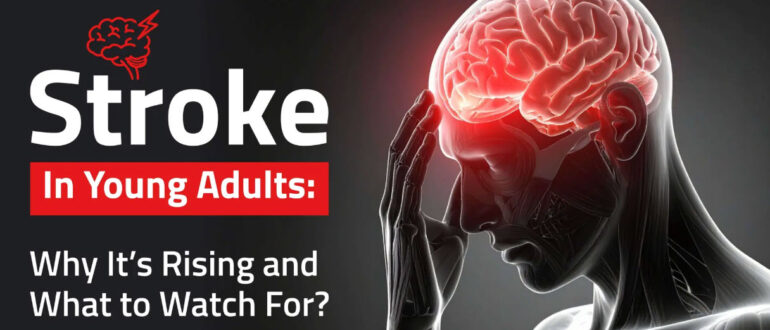

For decades stroke was understood as something that overwhelmingly struck older people, with risk climbing steadily into the seventies and eighties and the under-55s treated as rare, unlucky exceptions, but a run of large studies on both sides of the Atlantic has now overturned that assumption. The most recent, published in Neurology on 23 September 2026 by the American Academy of Neurology, examined records across the Greater Cincinnati and Northern Kentucky region and found stroke in adults aged 20 to 54 had nearly doubled over three decades; 33.9 cases per 100,000 in 1993, rising to 62.2 by 2020, a huge 83% increase.
The same trend has actually already been recorded here in the UK: the Oxford Vascular Study, published in JAMA in 2022, found stroke in the under-55s rose 67% between 2002 and 2018 while falling 15% in those 55 and over, and a much larger record-linkage analysis in PLOS Medicine this year, from the Oxford and British Heart Foundation data teams, found under-55 stroke across England up by around 10% between 2018 and 2024, fastest of all in Asian and Black communities.
In the American data we see that ischaemic strokes accounted for almost all of the rise, while haemorrhagic strokes stayed flat. The study, led by Dr Emily Fisher at the University of Cincinnati, found several risk factors had become more common in the young patients over the years: high blood pressure, diabetes, atrial fibrillation and substance use. It had no healthy comparison group, so it couldn’t establish which of these drove the rise. Differing from the UK, documented substance use climbed from 4.6% to 40.2% across the period, much of it cannabis. Survival improved; deaths within 30 days of a stroke fell from 11.7% in 1993 to 9.4% in 2020.
The Oxford team, led by Dr Linxin Li, found the rise was steepest among people in professional and managerial jobs, which the authors linked to long working hours, stress and low physical activity. The English PLOS Medicine study found undiagnosed high blood pressure and undiagnosed diabetes both rising in the younger patients, and the young were less likely than the old to be on treatment for them. The UCL ULYSSES study, published in the European Stroke Journal in 2025, followed young stroke patients through the North Central London service and found a full half of them (!) still had an unfavourable functional outcome at six months, while 91% reported non-motor problems such as fatigue and disturbed sleep; further papers on their longer-term outcomes have followed this year btw and more to be published next year.
Younger survivors do badly without proper rehab; surviving a stroke at 20 can mean a seventy to eighty YEARS of living with the effects, and those years need very long-term rehab and support, obvs not a few weeks of physio and a discharge letter.
Stroke reaches far younger than any of these studies, too. More than 400 children a year have a stroke in the UK, from babies in the womb through to teenagers, and around 60% of survivors are left with a lasting physical disability. It is one of the leading causes of acquired disability in childhood, but it stays badly under-recognised, and the rehab after hospital discharge is patchy. This is the gap the ARNI Instructors and I are now working to fill. I’m setting up (in collab with one of our amazing stroke survivor donors) a dedicated ARNI Young People’s Stroke Service for the 18-and-under group, with qualified, DBS-checked instructors re-training children in their own homes alongside a parent, and a loan pool of child-friendly rehab equipment. Funding is partly in place.. and fuller details will follow right here on this blog soon! Watch this space 😉