I want specialist stroke therapy & rehabilitation now

I want specialist speech and language therapy now

I'm a trainer or therapist wanting to qualify in stroke rehabilitation
We are on Facebook

Petr Piokomy is a qualified specialist personal trainer in stroke and neurological rehabilitation, and has been working in this field for the past 16 years. For the last 7 of those, he's been an associate of the ARNI Institute.
To keep this service running, ARNI relies heavily on donations and a small portion of commission from training sessions. Compared to private neuro rehab centres, ARNI offers a highly affordable and effective alternative - but they need support to keep going.
Here's how Petr is helping:
On Friday, September 25, 2026, ARNI instructor Petr will be taking on 13 Valleys challenge in Lake District in effort to raise awareness and funds for ARNI. This is around 114 miles throughout the national park with over 7,000 metres of elevation gain. This will be the longest and most challenging run he has run and is classed as ''brutal'' difficulty.
This is no small challenge - but it’s nothing compared to what many stroke survivors face every day.
If you can spare anything at all, we'd be be truly grateful for your support. Every donation helps ARNI deliver life-changing rehabilitation to someone who needs it.
www.justgiving.com/page/petr-pokorny-6?utm_medium=FA&utm_source=CL
#exerciseafterstroke #strokeexercise #neurorehab #strokerehabilitation #strokerehab

Petr's fundraiser for ARNI (ACTION FOR REHABILITATION AFTER NEUROLOGICAL INJURY)
www.justgiving.com
Help Petr Pokorny raise money to support ARNI (ACTION FOR REHABILITATION AFTER NEUROLOGICAL INJURY)
Did you know that Grip Strength predicts stroke risk AND stroke recovery success?? 💪🧠 The latter is quite well known, but informing the former is a major prospective study, just published, in the May 2026 journal 'Stroke', drawing on 482,699 UK Biobank participants led by Li-Li Tang at the Second Affiliated Hospital of Zhejiang University, which confirms that sarcopenia, lower grip strength and slower walking pace are all associated with increased stroke risk. Interesting, eh?
People with probable muscle loss had a 30% higher risk of any stroke; lower grip strength was linked to a 7% higher chance of having a stroke; and a slow walking pace was associated with a 64% increased risk compared to a brisk pace. Among those who had a stroke, confirmed muscle loss was associated with mortality rates nearly 46% higher.
So muscle function is a direct predictor of both stroke occurrence and survival after stroke – not a background health indicator. And grip strength really does matter just as much after stroke as before it; alongside coping with balance perturbation, it ranks as one of the two strongest predictors of functional success in recovery.
Dr Tom developed incredible grip strength through training and advises that it's vital to work grip from the earliest stages: using real functional tasks – task board work, challenge board work, incl turning taps, managing fastenings, picking up coins, gripping a cup, alongside wrist and finger extension work, mirror therapy and electrical stim. Magnetic chess, adapted cookery and woodwork all have their place too, as does LEGO, as does DJing if you want to; the hand works better when it has something real to do.
For survivors told their hand won't come back – the neuroplasticity evidence and ARNI's experience consistently says otherwise when retraining is done consistently over time. ARNI Stroke Rehab & Recovery says: grip strength is one of the two central pillars of functional recovery after stroke, and this research confirms it matters long before a stroke happens just as much as it does in recovery afterwards. 💙💪
www.arni.co.uk
#ARNIStrokeRehab #GripStrength #StrokeRecovery #Sarcopenia #StrokeRehabilitation
Is that photo of a stroke survivor? If not, is it supposed to be comical? Or to increase engagement with the post which I think takes it into clickbait territory, which you do not need. The post content in itself, as usual is interesting
Approximately 40% of stroke survivors experience this difficulty: to comprehend or produce spoken or written language caused by a cerebrovascular accident. In half of these cases the language impairment still persists one year post-stroke. Aphasia has wide-ranging effects on the ability to function and quality of life of stroke survivors and easily leads to social isolation.
If you need help, ARNI SLT Telerehab can now help YOU, right now, wherever you are in the world!
The latest evidence shows clearly that you can conquer aphasia very successfully with the help of speech and language therapy.
And it also shows that SLT Telerehab is just as effective as in-person, face to face treatment.
We have a team of highly experienced low-cost specialist SLTs (all post-grads from Universities such as UCL, the University of Cape Town etc) who are available to help you right now, in your home, via Zoom. You get a one to one hourly service, based around your diary needs, from the comfort of your own home, with a highly experienced specialist speech and language therapist. Please enquire to arni.uk.com/get-remote-speech-language-help-now/ !
#aphasia #strokesurvivors #StrokeRecovery #StrokeRehabilitation #strokerehab #AphasiaAwareness #NeuroRehabilitation #arni #exerciseafterstroke #strokeexercise #strokerecoveryexercises #neuroplasticity #ARNIstrokerehab
www.arni.uk.com
ARNI’s motto collection:
• Without your involvement in movement there won't be improvement. Tom says you can have that phrase 'on him'!
Use it or you’ll lose it! If there is a will, there is a way!
• Use it and improve it! With practice it will get better.
• Practice what you want to improve. With a really high number of repetitions.
Our goal is to prove to stroke survivors that their recovery can be successful with the help of the ARNI method. With ARNI, the survivor receives a tool an overall intervention 'map' that aims to show you how to adjust your rehab at any time and why.
We have trainers throughout the country who can help you. Call us on 0203 053 0111 or email support@arni.uk.com to find out if there's one near you.
www.arni.co.uk
#strokerehabilitation #strokeexercise #neuroplasticity #neurorehabilitation #strokerehab #strokerecovery #exerciseafterstroke #strokerecoveryexercises #neurorehab #strokesurvivorscan
Also, remember the two 'E's: 'stretching enables the task and extends time on task'!
Another Tom-ism to add, Pam - is to 'do a rehabby-hobby' 😉
Do you have here in the Philippines?
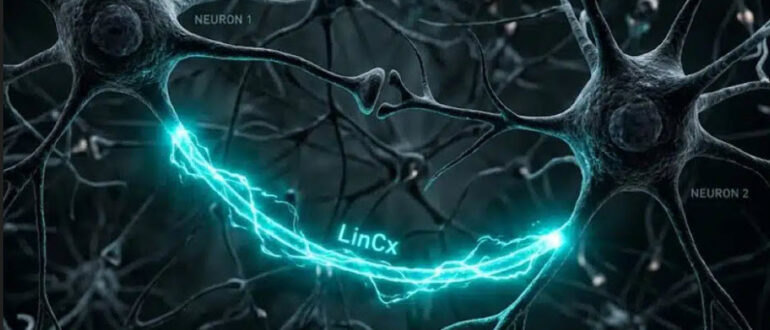
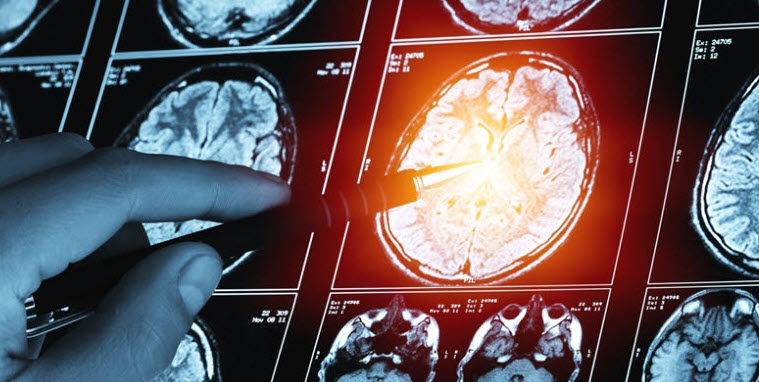
Brain rewiring is no longer science fiction – it's happening now. 🧠⚡Scientists at Duke University in the US have developed something called LinCx, just published in the journal Nature, and the basic idea is this: if a brain connection is damaged, instead of trying to fix it or medicate around it, you build a new electrical path between the neurons that need to talk to each other!
Think of it like a road closure: LinCx creates a working detour with a biological 'wire” designed to bypass broken or disrupted brain connections. Most current treatments, whether drugs or electrical stimulation, affect large areas of the brain at once, whereas LinCx targets only the specific cells you want to reconnect, leaving everything else alone.
For stroke survivors this is relevant because so many lasting effects after stroke come from broken communication between brain cells that are still there... not cells that have died, but cells that have simply lost their connection; and those broken connections underlie a wide range of problems that survivors know well.
Post-stroke epilepsy, which affects roughly one in ten stroke survivors, is caused by disrupted electrical activity in damaged circuits – and a technology that can restore orderly signalling between specific neurons could, in principle, reduce that disruption at source rather than suppressing it with medication.
The same logic applies to post-stroke depression, fatigue and cognitive problems like memory and concentration difficulties; all of these have circuit-level disruption at their root, not just chemical imbalance, which is why medications alone so often fall short.
It uses proteins originally found in fish that naturally form electrical connections; scientists engineered these to work only with matching partners so they do not interfere with anything else in the brain...
Obvs, this isn't going to be available on the NHS any time soon (realistically the mid-to-late 2030s if at all)- but good to be aware....💙🔬
#ARNIstrokerehabA#StrokeRecovery##BrainResearch #LINCXR#NeurologicalResearchlogicalResearch
Is this realistic? What is the cost of this?
That IS the nature of neuroplasticity (and decompensation) itself anyway. Very early on in my stroke journey 10 years ago I saw it as a 12 lane motorway bridge over a wide valley being reduced to one lane so my thought processes had to find an alternative route, which was using old terrain following roads over a fairly narrow bridge that's been improved over time.
Proteins ? From fish ? Hmm…
Nine years ago, I suffered a major stroke, ischemic with absolutely no speech and paralysed, on the right side. Two weeks in hospital, had surgery, then rehab. I spent four months to walk, to talk, had speech therapy etc. But my brain was severely damaged. NHS Is wonderful, but my grammar is f***ed. (Good word…)
Out now, I spent asleep. 15 hours there, then eat, then another sleep. That was IT. A whole year, asleep.
While my brain rewiring, missing memories etc. Two more years…
Then, three years later, I started ALOUD reading, just one page. The same lines, over and over and over. Every day, the words really difficult to say. That “Broca’s area “ (for language) had died completely. But discipline and dedication and motivation.
Just to TALK.
Two months later, 2 pages.
Three months later, 3 pages.
Four months later, 4 pages.
Nine years later, several pages now.
To talk ? I “converse” now, but some difficulties. I’m “expressive aphasia” for life, but slowly improving.
Practice and repetition and practice and repetition- every day.
But proteins and fish ?
Just don’t give up.
Or bloody minded…
If you're physically able, drawing and cooking can be great activities that promote attention in stroke recovery.
“Focus on doing things you enjoy, but adjust them to a level that makes sense for you now. So, if you love doing 1,500-piece jigsaw puzzles, scale it back to 100. If you love to tinker, start with small tabletop projects.
It really is about individually tailoring and modifying things.
www.arni.co.uk
#strokerecoveryexercises #strokerehabilitation #neurorehab #strokeexercise #strokerecovery #neuroplasticity #exerciseafterstroke #neurorecovery
Yes I have trouble comprehending anything
Mood swings is s lack of understanding
Tom's top tips:
If we do enough repetitions/tasks, our brain works for us and gets stronger.
Record yourself. Track your progress and a useful way to see how you are moving.
Make "challenge boards", these can be a collection of fastenings, fixtures and textures. All in one place, ready for you to practice and ensure you can increase your repetitions!
Ensure you have fun. Do a hobby, or try something new. For example, chess is a great way to train reach, grasp and release. (Tom became interested in DJing; a great way to practise shoulder/arm and hand movements!
www.arni.uk.com
If you like this post then please share it with others. Each time that you share a post, you can directly help other people – as who knows which people in the world might find us and gain, either directly from the charity or simply by being able to copy an ‘innovative and useful’ move/trick of the trade that might help them manage after stroke.
Every time you share, you could directly help someone – as knowledge is power 😉
#strokerecovery #strokerehabilitation #neurorehab #strokeexercise #neuroplasticity #strokerecoveryexercises #exerciseafterstroke
I made Lego models of motorcycles, complex, needing both mental and hand dexterity. Much more interesting than picking up lentils (earlier on in the process)
One of the biggest keys to progress in stroke recovery is to come to appreciate that 'everyday active retraining' is the zone you need to be in. It doesn't AT ALL have to be vigorous. It just needs to be gently suitable for you and, above all, consistent.
Need help? Have a look at www.arni.uk.com
If you like this post then please share it with others. Each time that you share a post, you can directly help other people – as who knows which people in the world might find us and gain, either directly from the charity or simply by being able to copy an ‘innovative and useful’ move/trick of the trade that might help them manage after stroke.
Every time you share, you could directly help someone – as knowledge is power 😉
#ARNIstroke #neuroplasticity #arnistrokecharity #arnistrokerehab #strokerecovery #ARNIstrokerehab #neurorehab
Stroke at 38: cardiac arrest too – and she survived. 🧠⚡Joni Hughes from Doncaster tells her story this weekend..
She had always considered herself healthy; there was nothing to suggest something like this could happen. In November 2022, an unusual pain on the left side of her neck was initially put down to muscle strain – and then one evening she sneezed, collapsed, and couldn't move her right side at all.
Her partner called the emergency services and the ambulance arrived within minutes. By the time she reached A&E her speech had gone; confusion had set in and she went into cardiac arrest – and was 'gone' for four minutes before the team brought her back.
She spent a week in intensive care on a ventilator, with pneumonia alongside all the usual sequelae of stroke. It's worth noting that she says the kinds of things that mattered most were the smallest things: a healthcare assistant making her smile, or plaiting her hair after a shower - does this chime with your acute xperience too?
Joni still lives with right-side weakness, drop foot and significant fatigue.. and uses FES to walk... some days are manageable, some are not, and the fatigue is, in her words, the worst part. She recently put petrol in her car unaided; she counts it as a big moment and it really is. ARNI Stroke Rehab & Recovery says: Joni's account is familiar; the fatigue, the lost independence.. and the 'small wins'.... if you are a stroke survivor reading this, her words will be very familiar, yes? 💙🙌
www.arni.uk.com
#ARNIStrokeRehab #StrokeSurvivor #StrokeAwareness #BEFASTStroke #StrokeRecovery
Keep smiling be strong
💙 strikes are vile i had one 5 years ago, its a very long road
15 months post stroke caused by carotid artery dissection which was caused by coughing.
,Six years post stroke you can do it 💯👍
Something similar happened to me. It’s so easily done and this needs to be more publicly known for others to take note and get checked out. Even for the smallest of pains especially in the neck area
Well done
Hope you get a lot better soon.
That really young have a stroke I had stroke 98 Elsie Eddington.
blessyoitssofrighteningisntityourlookinggreatjustletthepositivevibeconsumeyothebestwsy tohelpyoureschyourgoslsyouvgot thi ifyoufontbeleive meimsuresomeonewilldesignatshirtandsendyouipostfree
Bless 🙌
Never say never. There's always hope.
www.arni.uk.#strokeexerciser#StrokeRehabilitationa#neurorehabr#strokesurvivorscanr#StrokeRecoveryo#neuroplasticityi#exerciseafterstroket#strokerecoveryexercisesc#exercisestroketroke
And my partner, Harry Taylor, has done just that. After having a severe haemorrhagic stroke in June 2023 leaving him with right side paralysis, Aphasia and Apraxia he's just had a book published by the History Press!!! When Harry Met Peggy, the perils of restoring a classic Austin 1100. Told with charm and humour. So proud of him. 💪💪💪❤
NEW! GET YOUR COPY OF NEW BOOK BY TOM BALCHIN LEARN HOW TO RECOVER OPTIMALLY
CLICK HERE
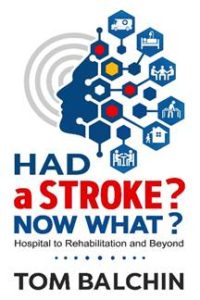 Whether you had your stroke a week or 20 years ago, this seriously practical book reveals everything you need to know about for real-life, evidence-based long-term recovery from limitations caused by stroke, that you can actually understand, use and apply successfully for yourself. With 244 pages of new information and material, it’s stacked with revelations for you based on the neuro-rehabilitation evidence-base.
The ARNI Blog

-
Novel Electrical Bypass for Stroke Damage
May 18, 2026
-

Blood Test Identifies Severe Stroke in Ambulances
May 15, 2026
-

Will Backpack Gyroscopes Replace Walking Frames?
May 11, 2026
-
View Comments
Likes:
2
Shares:
0
Comments:
0