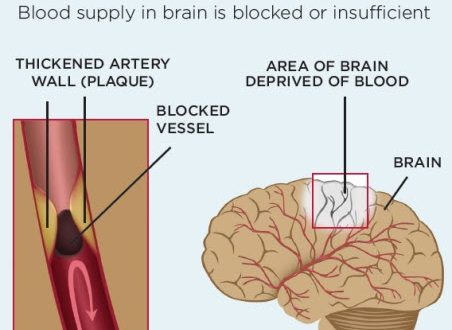
Could YOU tell a stroke from something that just looks exactly like one? 🧠🔍Stroke mimics account for about 1 in 4 stroke admissions; and that basically means that on a busy stroke ward, one in every four people rushed in on a stroke pathway is NOT having a stroke at all.
In one major ten-year evaluation of a hyper-acute stroke unit, roughly half of all attendees turned out to be stroke mimics rather than actual strokes – and the single most common mimic was migraine. Other conditions that can mirror stroke precisely include seizure, psychiatric disorders, brain tumours, demyelinating diseases such as multiple sclerosis, and metabolic conditions such as hypoglycaemia.
A seizure followed by Todd's paralysis (which is temporary weakness or paralysis on one side of the body), is particularly deceptive; both acute and chronic strokes can cause seizures, making this one of the most difficult mimics to exclude from an acute stroke presentation.
And extraordinarily enough, one out of four stroke mimics receives thrombolysis!!! In most cases this turns out to be relatively safe (the risk of symptomatic brain bleeding in mimic patients given thrombolytics is 0.5%, compared to 5.2% in true ischaemic stroke), but it is still a powerful drug given to someone who does not have a stroke...
And the other thing is that, as we know too well at ARNI, and so many of our readers have experienced first-hand (but wish it'd had not been so)... real strokes are also missed, particularly in younger patients, in women, and in those presenting with dizziness or headache rather than the classic FAST symptoms.
Worth noting btw that no single historical detail or physical examination finding reliably distinguishes stroke from stroke mimic; mimics can produce neurological deficits confined to a vascular territory, span multiple territories, or follow no vascular pattern at all... and I've found that the reported prevalence of stroke mimics varies from 2% to a huge 38% depending on clinical setting, diagnostic criteria and imaging modality used. 🧠💙
#ARNIstrokerehabA#strokemimicsb#strokediagnosisS#strokeawarenessS#StrokeResearch#StrokeResearch
... See MoreSee Less
Movements highly related to particular activities that are experienced and practised intensively pre stroke, will excite and interest the brain, if introduced into rehabilitation post stroke. If you like this post then please share it with others. Each time that you share a post, you can directly help other people – as who knows which people in the world might find us and gain, either directly from the charity or simply by being able to copy an ‘innovative and useful’ move/trick of the trade that might help them manage after stroke.
Every time you share, you could directly help someone – as knowledge is power 😉
www.arni.uk.com
#ARNIstrokerehab #strokesurvivors #neuroplasticity #strokesurvivorscan #arnistroke #strokerehabilitation #arnistrokerehab #neurorehab #strokerecovery #arnistrokecharity #ARNIstroke
... See MoreSee Less
Regular exercise therapy is important during stroke recovery. Your daily function and independence can improve with time and dedication. To maximize this, continue working closely on your rehab exercises and stay committed to your exercise program. Since it can be difficult to stay motivated, find ways to incorporate your favourite activities, or home rehab equipment, to make your program more enjoyable.
If you need some help call us on 0203 053 0111 or email support@arni.uk.com and we'll get one of our trainers to work with you.
www.arni.uk.co.uk
Please share this with others. Each time that you share a post, you can directly help other people – as who knows which people in the world might find us and gain, either directly from the charity or simply by being able to copy an ‘innovative and useful’ move/trick of the trade that might help them manage after stroke.
Every time you share, you could directly help someone – as knowledge is power ;)
#strokeexercise #strokerehabilitation #strokerecovery #neurorehab #strokerehab #strokerecoveryexercises #exerciseafterstroke
... See MoreSee Less
Stroke at 86 – and humming 'Happy Birthday' helped bring his speech back. 🧠🎶 Padric MacDonald, an 86-year-old Inverness dad, collapsed on his bathroom floor on 16 December last year; by the time paramedics arrived 40 minutes later, his family knew it was far more serious than the broken hip they'd initially feared...
At A&E in Raigmore Hospital, he faced the frightening prospect of having lost his speech entirely,,, and it took three whole weeks before it began to return (gradually), with humming 'Happy Birthday' playing a surprising role in that process! You'll know that this isn't as unlikely as it sounds; music and rhythm engage different neural pathways to those used in ordinary speech production, and melodic intonation therapy (MIT) – using sung or hummed phrases to bypass damaged language circuits – has a growing evidence base in post-stroke aphasia rehabilitation.
He spent seven weeks in Raigmore's stroke unit and was then admitted to the Royal Northern Infirmary for rehabilitation and physiotherapy, was readmitted to Raigmore after developing sepsis, and finally came home 150 days after his stroke.
His wife Win, a former nurse, said their life was brought to a standstill; but she also said Padric 'worked exceptionally hard on everything they gave him... from physio to occupational therapy and speech and language; he was their prized patient.' Good stuff.
His daughter Sarah described all the staff – doctors, nurses, healthcare assistants, physios, occupational therapists and domestic staff – as 'absolutely brilliant.'
ARNI Stroke Rehab & Recovery says: Padric's story is a reminder that age absolutely shouldn;t be a ceiling on recovery...hard work, good rehab, cake and the unexpected magic of a hummed birthday song - that's what quality stroke rehab looks like! 🧠💙
www.arni.co.uk
#ARNIStrokeRehab #StrokeRecovery #StrokeSurvivor #Aphasia #StrokeRehabilitation
... See MoreSee Less
One way to encourage muscle activation and gain arm movement after stroke is through weight-bearing exercise. This can be done while sitting or standing and involves placing your affected forearm or hand on a surface and gradually putting some of your weight through it. This helps to provide input from your arm to your brain to rewire their connection through neuroplasticity.
Weight-bearing can be easily incorporated into many of your normal daily activities. For example, try leaning on your affected arm while it is on the countertop during teeth brushing, on the armrest of your chair while chatting, or on the table while you’re playing cards. By doing this, you can be activating neuroplasticity and promoting recovery throughout your daily routine to help you regain arm use after stroke.
www.arni.co.uk
#neurorehab #strokerehab #neurorehabilitation #strokesurvivorscan #strokerehabilitation #strokeexercise #neuroplasticity #strokerecovery #strokerecoveryexercises
... See MoreSee Less
ARNI Stroke Rehab page readers will of course know the difference! BUT, did you know that having a migraine with an aura will raise stroke risk – at ANY age, NOT just when young?. 🧠⚡
This is explained in a very interesting study published just yesterday in Neurology, by Dr Adam Blum at the University of Vermont, who followed 11,381 adults with an average age of 72 over six years and found that migraine with aura was associated with an increased risk of ischaemic stroke in middle-aged and older adults; whilsy migraine without aura was not.
Of those with migraine with aura, 5% had a stroke during the study period; compared to just 3% of those without migraine. There was also a striking sex-specific finding; male participants under 72 with migraine (with or without aura) had a more than 3.5-fold increased risk of stroke – unexpected, given that prior research in younger people showed stroke disproportionately affecting women.
The mechanism is not fully understood yet, but people who experience aura may well have an increased tendency to form blood clots due to temporarily narrowed blood vessels... and the elevated risk remained after adjusting for vascular comorbidities (blood pressure, cholesterol and so on), meaning it is not simply explained by other health conditions running alongside.
For stroke survivors who had migraine with aura before their stroke and for those still living with migraine post-stroke, it reinforces why vascular risk factor management is important. ARNI Stroke Rehab & Recovery says: if you have migraine with aura (or did before your stroke) this study is directly relevant to you; and if you're in middle age and experiencing aura for the first time, definitely speak to your GP about your stroke risk profile when you next see him/her (if you can actually make an appointment to see him or her without a wait of 5 months ;) 🧠💙
www.arni.co.uk
#ARNIStrokeRehab #MigraineAndStroke #StrokeRisk #MigraineWithAura #StrokeAwareness
... See MoreSee Less
Continually staying active mentally has been shown to improve memory and communication skills.
Participating in physical activities, acquiring a healthy diet and eliminating smoking and alcohol consumption have all been shown to improve symptoms of vascular dementia.
Read more on the topic in this article from thei ARNI blog.
#strokerecovery #strokerehabilitation #neuroplasticity #arnistrokeblog
... See MoreSee Less

MANAGING VASCULAR DEMENTIA AFTER STROKE | ARNI
arni.uk.com
Each year there are more than 100,000 first-time strokes in the UK; and as you may have heard on the news a couple of weeks ago, this number is set to rise by 50% by 2035. And as you know…
Do you, or someone you know, want to become an ARNI Trainer? Cohort 2 of 2026 ARNI Instructor training is now open (remote or hybrid). APPLY NOW!
arni.co.uk/cohort-2/
#exerciseafterstroke #strokerehabilitation #strokerehab #strokeexercise #neurorehab #neuroplasticity #arniinstructortraining
... See MoreSee Less
Standing upright, try to touch a certain points on your chest, shoulder or neck. Try pulling your affected arm right across your body to the good side, or touch a point at your hip or thigh on the affected side.
Be creative. Have some fun. Challenge yourself. Don’t over-reach yourself. If it hurts, don’t do it, and try hard to resist using hip rotation in order to do perform the torso self-touches.
www.arni.co.uk
If you like this post then please share it with others. Each time that you share a post, you can directly help other people – as who knows which people in the world might find us and gain, either directly from the charity or simply by being able to copy an ‘innovative and useful’ move/trick of the trade that might help them manage after stroke.
Every time you share, you could directly help someone – as knowledge is power ;)
#strokerecoveryexercises #strokerecovery #neuroplasticity #strokeexercise #neurorehab #strokerehab #neurorehabilitation #strokerehabilitation #strokesurvivorscan #exerciseafterstroke
... See MoreSee Less