Research shows that you must place as much emphasis as you can on training the grasp and release component (of the finger joints) as you can, with the same (or even more) emphasis on it than working the reach component (of the elbow and shoulder joints).
www.arni.uk.com
Taken from The Successful Stroke Survivor book by Tom Balchin.
#Neuroplasticity #strokerehabilitation #strokerecoveryexercises #strokeexercise #strokerehab #neurorehab #exerciseafterstroke #neurorehabilitation #strokeneuroplasticity
... See MoreSee Less
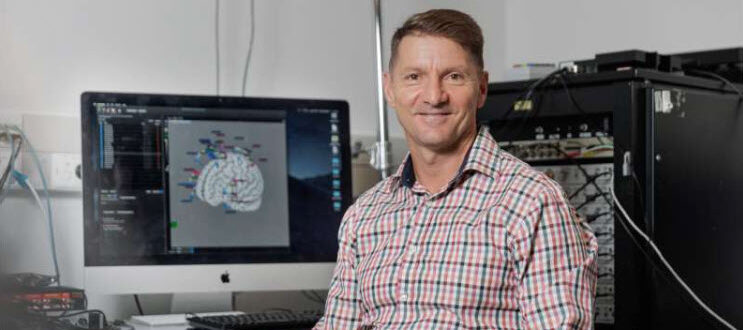
Early upper-limb stroke therapy intensity just got seriously questioned! A clinical trial led by Professor Winston Byblow at the University of Auckland has found that high-intensity hand and arm therapy begun within two weeks of stroke did not improve recovery beyond standard care alone... interesting..
And the findings, just published in the journal Brain Communications, challenge the widely held belief that 'more therapy, earlier' leads to better outcomes.
The ESPRESSo trial – Enhancing Spontaneous Recovery after Stroke – compared three weeks of daily high-repetition therapy against standard care, selecting patients using a biomarker linked to their recovery potential regardless of initial symptom severity; a world-first for a rehabilitation trial.
One group used an immersive videogame platform guiding an animated dolphin or orca through levels of play... the other received a time-matched dose of conventional therapy. Despite an extra 90 minutes of therapy daily for 15 days, neither group outperformed a cohort who received standard care only. 'We saw substantial recovery in almost all patients, but without any benefit of having extra therapy,' said Professor Byblow.
So if you're reading this post on ARNI Stroke Rehab & Recovery and you've just had a stroke (or someone you know has) - firstly, well done you for straight away looking for sources of recovery info (!) and secondly, this matters for hand and arm recovery because the researchers suggest that early post-stroke recovery is dominated by powerful biological repair processes – and that simply adding more therapy on top may not enhance those processes at all.
BUT, this doesn't mean therapy isn't vital; bevcause it is! It means timing, type, and biological readiness may matter more than sheer volume... 🧠💪🐬
www.arni.uk.com
#ARNIStrokeRehab #StrokeRecovery #StrokeRehabilitation #HandRecovery #StrokeResearch
... See MoreSee Less
After a stroke the brain is able to recruit healthy cells to replace the damaged areas by rewiring neural pathways. This process is called neuroplasticity. Neuroplasticity is the single most important process for stroke recoveryand is the focus of rehabilitation.
Neuroplasticity is massed practice; each time a task is practiced, it stimulates the brain and strengthens the connections responsible for that task. (This is how children learn how to walk, write, and talk) The same thing applies to stroke rehabilitation. When a stroke survivor struggles with arm movement, for example, they can work to regain function by practicing arm exercises on a consistent basis. This helps improve the brain’s ability to send signals to the arm that tell it when to move, improving efficiency and overall function.
www.arni.uk.com
#strokerehab #neurorehabilitation #strokerehabilitation #exerciseafterstroke #strokerecoveryexercises #neuroplasticity #strokerecovery #neurorehab
... See MoreSee Less
Exercise: Wall squat hold Did you notice that this technique is called a wall-squat hold?
There is a reason that you don’t attempt to turn it into a squat, and try and rub yourself up and down a wall. Such an attempt won’t work for stroke survivors, mainly because the bad foot will slip away, and you could easily be unable to slide up the wall because of the friction involved. Friction against the back makes the exercise impractical to do, even for non-stroke survivors, unless you could find a Teflon overcoat or a massive saucepan against which to do the exercise. Also, be very careful with your knees. The wall-squat hold can possibly load them with too much of your body weight, so be sure to err on the side of caution if there is any pain. So, a much better exercise is to slide down the wall and hold until near failure, then lean forward, push away from the wall and stand upright. You should not feel pain or discomfort in your knees at any time during this exercise, and any pain is a signal to end the exercise immediately. A fierce burn in the thighs isn’t an excuse to end early! Fear of failure IS an excuse to end the set however, as you still gave to control the press-from the wall. So, when you think you are coming towards the end of failure, just move to a standing position. Over time, your judgement concerning extending the failure window and successful successful completion of the set will be honed.
Technique
Figs. 1 – 6. Stand with your back to a wall. Walk your feet forward forward so that they are now about 2 ft away from the wall. Adjust your feet out so that when you bend and straighten, you feel no pain and the bad knee will not tend to collapse inwards (Fig. 1). Now squat down into a squat depth you are comfortable with (Fig. 2) by bending your knees to slide your back down the wall. Ideally, you will come to a level almost as low as sitting. Keep your weight evenly distributed over your feet, not your heels, throughout the exercise. Let the presence of any knee pain guide you. Remain with ‘comfortable knees’. Also, check to see that your knees do not come any more forward than your ankles. Try to line up your knees with the area between the big toe and the 2nd toe. This will protect your knees from injury. If need be, adjust the distance between the wall and your feet to accommodate good knee alignment and the level of challenge to your muscles. In other words, if it will help you accomplish the movement safely then it’s fine to take them out more than 2 feet. Be very careful, though, that your bad foot doesn’t slip. Hold the position for 5-10 seconds. Breathe evenly. If this position feels challenging to your muscles, embrace the pain and pay attention to your breath. That should help you get through your 5-10 seconds. Eventually, you can probably work up to holding the position for 1 or 2 minutes. To rise up, don’t try and pull one leg back beneath you. This is a common mistake. The bad ankle may crumple and not hold your weight, and both legs will simply have been worked too hard to supply a push-up-to-standing position if you do the technique to failure, as this movement demands. Try this version. Simply lean your head right forward (Fig. 3). This will immediately take some pressure off your thighs and give you a time window to reach behind and push the wall away with your good hand (Fig. 4). You can see that, in the same way as getting up from the floor, you are just using the weight of your head (Fig. 5) to lever yourself upright (Fig. 6). It works. Try it!
From The Successful Stroke Survivor by Tom Balchin
... See MoreSee Less
A Dublin hospital has just been held accountable for medical negligence⚖️ A 73-year-old man requiring full-time care has secured a €1 million settlement against Beaumont Hospital Board in the Irish High Court, after the hospital failed to administer antiplatelet medication on time following brain surgery on 14th June 2024.
Beaumont admitted this fell beneath its expected standard of care – yet still contended it did not contribute to the deterioration in his condition. Senior counsel Patrick Treacy, instructed by Cian O'Carroll Solicitors, described the original surgery as 'remarkably successful'... but a breakdown of communication between the surgical and radiology teams meant dual antiplatelet therapy was never given after a clear post-operative brain scan.
The case was brought through the man's daughter, and contended that his condition would have stabilised had the medication been given promptly after that clear scan. He was chatting normally with family at 4pm; by 7pm he was slurring his words again and a subsequent scan showed a serious clot at the stent site – surgeons operated again around midnight, but without success.
He now requires round-the-clock care provided by his wife, and has a pacemaker and a history of heart issues which the hospital cited in its defence. Judge Emily Egan approved the settlement – describing it as 'extremely good' given the significant issues in proving causation – and rightly commended the family's 'dedication #ARNIstrokerehab.#strokerecovery.#strokeawarenessI#MedicalNegligencee#AntiplateletTherapyeness #MedicalNegligence #AntiplateletTherapy
... See MoreSee Less
THE LATEST STROKE RECOVERY NEWS INCL. The Undamaged Side of the Brain Isn’t Passive After Stroke -
... See MoreSee Less
Great News! Your brain can quietly rejuvenate itself after stroke! A remarkable study published in The Lancet Digital Health by scientists at the USC Mark and Mary Stevens Neuroimaging and Informatics Institute (Stevens INI) has found that stroke survivors with severe physical impairment may show signs of 'younger' brain structure in undamaged regions as the brain adapts to injury.
The research is part of the ENIGMA Stroke Recovery Working Group, led by Dr Hosung Kim and Dr Sook-Lei Liew PhD at the Keck School of Medicine of USC, analysing brain scans from more than 500 stroke survivors across 34 research sites in eight countries.
Using an advanced AI tool called a graph convolutional network, the team estimated the biological age of 18 brain regions from MRI data, finding that larger strokes accelerate ageing in the damaged hemisphere but paradoxically make the opposite side appear younger... a pattern most visible in the contralesional frontoparietal network, which supports motor planning, attention and coordination.
Professor Arthur W. Toga PhD, director of the Stevens INI, noted that pooling worldwide data and applying AI reveals subtle patterns of brain reorganisation that would be invisible in smaller studies, and that these findings could eventually guide personalised rehabilitation strategies.
For UK survivors and clinicians, this matters because the undamaged brain isn't at all just passive after stroke – it's actively adapting – and MRI-based brain age biomarkers could one day become a practical tool for predicting recovery and tailoring rehabilitation in NHS settings, though routine implementation remains some years away
ARNI Stroke Rehab & Recovery comments that this research reinforces the evidence re why sustained, high-quality rehab-training (retraining!) that challenges the brain over the long term is so important; the brain's capacity for adaptation after stroke is greater than we once thought...🧠🔬💡❤️
www.arni.uk.com
#ARNIStrokeRehab #StrokeRecovery #NeuroplasticityAfterStroke #BrainResearch #StrokeRehabilitation
... See MoreSee Less
Weight bearing exercises are a great way for improving shoulder subluxation and improve communication between the brain and the arm. They involve putting weight through the arm, and can be integrated into daily activities or practiced as part of an exercise program.
To practice weight bearing through the shoulder, sitt in a chair with an armrest. Rest the forearm on top of the armrest with the palm facing down, leaning toward the armrest to put some weight through the arm. Hold for 10 seconds, then relax. Ensure the shoulder stays away from the ear, rather than shrugging upward, and stop if any pain occurs.
If you need some help with your recovery call us on 0203 053 0111 or email support@arni.uk.com We have trainers throughout the country.
www.arni.uk.com #neurorehab #strokerecoveryexercises #strokeexercise #exerciseafterstroke #neurorehabilitation #Neuroplasticity #strokerehab #strokerehabilitation #strokerecovery
... See MoreSee Less
Approximately 40% of stroke survivors experience this difficulty: to comprehend or produce spoken or written language caused by a cerebrovascular accident. In half of these cases the language impairment still persists one year post-stroke. Aphasia has wide-ranging effects on the ability to function and quality of life of stroke survivors and easily leads to social isolation.
If you need help, ARNI SLT Telerehab can now help YOU, right now, wherever you are in the world!
The latest evidence shows clearly that you can conquer aphasia very successfully with the help of speech and language therapy.
And it also shows that SLT Telerehab is just as effective as in-person, face to face treatment.
We have a team of highly experienced low-cost specialist SLTs (all post-grads from Universities such as UCL, the University of Cape Town etc) who are available to help you right now, in your home, via Zoom. You get a one to one hourly service, based around your diary needs, from the comfort of your own home, with a highly experienced specialist speech and language therapist. Please enquire to arni.uk.com/get-remote-speech-language-help-now/ !
#aphasia #strokesurvivors #strokerecovery #strokerehabilitation #strokerehab #aphasiaawareness #neurorehabilitation #arni #exerciseafterstroke #strokeexercise #strokerecoveryexercises #Neuroplasticity #ARNIstrokerehab
www.arni.uk.com
... See MoreSee Less
Exercise: Fingertip to thumb touches
This exercise is all about control of the thumb whilst trying to minimise flexion from your other fingers. Most stroke survivors find it very difficult to achieve ‘fractionation’: the ability to move fingers independently.
It's an exercise that asks you to flex, touch and extend again, repeatedly. It’s not easy. I used to try doing it simultaneously even when one had no movement in – this, I’m sure, helped me amongst other things, to regain pretty good action control.
Bring your affected hand down to the book, table or any flat surface. Help it to get there if necessary, whilst passively opening up the fingers as much as possible. Lay your wrist firmly on the book with the back of your hand touching the surface. Touch the thumb firstly to the index finger, then the middle finger, the fourth finger and then the little finger. Keep going back and forth if you can This is probably best done by reaching over your bad hand with your good hand’s index finger and thumb and moving the thumb to the appropriate positions. Use both hands simultaneously too.
Taken from The Successful Stroke Survivor book by Tom Balchin
www.arni.uk.com
#neurorehab #exerciseafterstroke #strokerecoveryexercises #strokeexercise #strokehandexercise#neuroplasticity #strokerehab #neurorehabilitation #strokerehabilitation
... See MoreSee Less