I want specialist stroke therapy & rehabilitation now
I want specialist speech and language therapy now

I'm a trainer or therapist wanting to qualify in stroke rehabilitation
We are on Facebook

Stroke survivors are being failed EVERY SINGLE DAY due to staff shortages. The numbers make very uncomfortable reading. Have a read and tell us what YOU think? What was your experiences? UK based or anywhere in the world, PLEASE let us know in the comments below...
A new national survey of stroke physios working across 159 NHS services throughout the UK, has found that community stroke services are operating with 26% fewer physiotherapists than national guidance recommends... acute stroke teams are running at 15% below recommended levels... and community rehabilitation support workers are 36% below guidance.
While the level of commitment, care and therapeutic practices by NHS staff in stroke wards is generally found by most stroke survivors who comment here, to be of a high standard, this he report (just published by the Chartered Society of Physiotherapy (CSP) and the Association of Chartered Physiotherapists in Neurology (ACPIN), makes revealing reading.)
Our guidelines say you should receive therapy-based rehab for 3 hours a day, 5 days a week; but the data shows that on average, people receive rehab on only 3 to 4 days a week in hospital and just 1 to 2 days a week once discharged home. (Often after months of waiting for anything at all)...
So if you found yourself receiving much less rehabilitation than you need, you're NOT imagining it and you're not alone; the system is chronically understaffed and the gap between what should happen and what does happen is now officially documented.
ARNI Stroke Rehab UK Charity representatives feel very strongly about this issue and comment that 'we are literally failing a generation of stroke survivors. Dr Tom says: this report says what stroke survivors and their families have known for years – and while we welcome the growing evidence base and the advocacy from the CSP and ACPIN, urgent action is needed now, not more reports. 💪🧠❤️🩹
w#ARNIstrokerehabA#strokerecovery##StrokeRehabilitatione#nhsstroket#strokesurvivor#StrokeSurvivor

Had about 4 weeks of 1 half hour session a week. So got myself a PT at gym best thing I've ever done
I had a stroke in1988 physio was not good enough after 6month i went to india done physio for 6month 1 hour every morning and made98% recovery
I survived an intracerebral haemmorrhagic stroke about the size of a golf ball last June and I can vouch for this. Stroke victim? No, survivor. Victim of the NHS? Yes.
Dad was in a Covid ward had a stoke then moved to stroke ward we were told to come get him then left to
Figure it out our selves , mum had a stoke I went to get her and asked the dr are you sure she’s fit to go home they said yes I said so can you see she’s came out dressed back to front … that’s when we decide they ate better at home with us
I had my stroke 2007 in hospital for a few weeks then sent to rehab for 4/5 months and my treatment by the hospital was excellent the staff was brilliant then I left after being discharged from rehab had 6 weeks of physio from the nhs then nothing so looked to private physio found a lovely guy who came to my house was brilliant but after a few sessions I couldn’t afford it anymore so stopped I continued to do the exercises myself then other Heath problems kicked in so had to stop I also joined a gym which was brilliant so I definitely recommend joining a gym if you can.
After being misdiagnosed with hemiplegic migraine I had an ischaemic stroke and received no thrombolytic therapy and no follow up of any kind for months after being discharged from a rehab unit in Oxfordshire 😢 Two years on, I have regained use of my arm and my leg is more stable, and I am grateful for all the information that I have found online to help with my recovery 😗
I was lucky, I lived in Wolverhampton when I had 2 strokes. New Cross hospital discharged me within 3 days. but gave me a care plan of 6 therapists to call on me every day for 5 weeks, they taught me how to walk again, speak again, and never gave me time for self pity. since those 6weeks I was ready to carry on determined to recover and 8 years on I still practise my exercises every day. Yes, it's been a very sow painful journey. But I now consider myself a true survivor
i had 3 years of physio started at twice a week for about 45 minutes then we t to once a month no other support or rehab . 38 years ago then left to get on with life all the struggles of aphasia and other issues stroke leaves you with
im left with hemmibalismus down my left side
i was 20
My husband had a month in a rehab facility but wasn’t as good as we thought it would be. He was kept in his own room. When in hospital the nurses encouraged him to try to speak & he would do so with patients & their visitors. When in rehab they thought he was Italian as he speaks “jargon” & they couldn’t understand him so he gave up. We then had to wait over 6 weeks for physio to start at home. When it did she was brilliant & kept going past the 6 weeks as she was invested in us. After that had to wait several weeks for the community team which came in for about 20 minutes, gave us some equipment & then that was it. Then found out about ARNI & Neurokinex gym - all by word of mouth. No one told us about spasticity, about possible seizures, total shock when he had his first one. We are 4 years down the line & he has gone backwards as we have grown tired of chasing things. It’s all a lottery & luck. I can’t believe there aren’t any specialist centres for Stroke survivors- we have a charity one for MS not too far & they’ve started taking stroke survivors as well - they have a hydro pool, oxygen tank, gym etc for a minimal donation by members - also have classes & for the rest of the family. This is the kind of thing that I thought The Stroke Association had to offer. With all the will in the world after 4 years our enthusiasm is going & it’s very frustrating as I know he could still improve but the fight has gone out of us. Being a full time carer, looking after all paperwork, working & then trying to do exercises etc it’s all become too much for us.
Discharged from stroke unit because I could push pull and bend my fingers ??? But…
Hospital were great and physios did brilliant job at home getting me walking again.The big problem is the long term ongoing support especially from GPs .I feel like I am not heard or given enough information
No rehab at all during pandemic 1 physio session before I left hospital, 1 follow up MRI and that was it basically left to get on with it I was 51!! VAD and Cerebellar stroke xx
Almost no rehab during the Pandemic
After a Tramatic Brain injury in a car accident- an 2 yrs of being ignored told its in my head 🤣 took 4yrs for 6 sessions of rehabilitation - i decided to learn about neuro plasticity an researched it ive double vision an wear prisms lenses to read,(year 5) night reactive lenses for light sensitivity an subjected myself to noise to tolerate more sounds - repetitive actions ive my left side back (left side global weakness ) my hand an foot strengthen exercises i can get the oil cap off my car now do a little then rest an repeat an keep repeating fine motor skills i can hold a fork, keys, hold chair an salsa steps pattern ive still balance issues an been referred to vestibular therapy at year 6 ( Its called patient heal thy self!)
I was left with a numb heel, I was told to keep it for 2 years and I would get used to it.
My husband had a stroke 7 yeas ago. He got physio in the hospital. After when he came home he hardly had any. We've had to struggle since then. I don't think they medication helps either. I think it should be monitored more.
In the general hospital there was very poor basic care, and provision of therapy was minimal. In rehab hospital care was much better though therapy input still well short of what is recommended in NICE guidelines - just not enough staff. It is hard to see how people can progress and meet their potential with such infrequent, stand alone input. Better services would hugely improve quality of life but also reduce expenditure on health and social care post rehab
It's beyond dismal. They've updated the guidelines without providing the necessary therapy. Harry Taylor spent 3 months on a neuro-rehab ward at Canterbury Hospital which was generally good but not consistent and there was nothing at weekends. When the initial haemorrhagic stroke happened in June 2023 the ambulance took too long to reach Harry. After discharge we waited a few months for community rehab but it was limited to 1 day per week for around 6 weeks. After this we decided to take charge ourselves and treat Harry's recovery as though it was our new full-time job using our savings to pay for professional support, and then putting all the advice into practice 5 days per week. We also used the hydrotherapy at the Canterbury MS Centre and the neuro-physio services at The Parkinson's Centre at the Kent University campus. These organisations have extended their services to those experiencing any Neurological condition including stroke, having seen the gap in the NHS provision. We've also self-funded speech and language therapy for 2 years now. Currently we're exploring Stroke Fitness with bases throughout Europe and in the US. They specialise in equipment and exercises that focus on getting both sides of the body moving again to encourage bi-lateral movement, crucial in encouraging the brain to make new neural pathways. Recovery as opposed to rehab, which in our experience strengthens the strong side to compensate for the weak side. Again using all our savings. There's hardly anything that's useful for meaningful stroke recovery on the NHS, unfortunately. Harry has right side weakness, little use of his arm, Aphasia, Apraxia and Dysarthria. He's working so hard on recovery.
If you got the money, all is well.
Took my husband to hospital 3 times over the course of 2 days. By the time they hospitalised him and hit the button it was too late. He had had 10 strokes. Needed 7 months away from home. And then, to add insult in injury, the staff made fun of him when they thought he wasn't on the phone. I heard the whole thing. My heart broke all over again.
A worrying read Rachel Mould
I’ve been waiting for a year to see someone
My husband is a stroke survivor. When requesting help as soon as I mention "stroke survivor" anything that has been offered stops.
I wasn't
Via my Mum… “ I have had no rehab since leaving the hospital in August of 2024 after a stroke. I have been referred for physio at the local hospital by my doctor, but only for other non stroke related problems. I have never had any follow up at all even though my physio has tried contacting my stroke team more than once. I do not think I have a stroke team. If I do, I have never heard from them.”
Losing peripheral vision after stroke is one of the least talked about but most life-limiting consequences you can face. But if you've been told there's nothing that can be done, that isn't the full picture.
The condition is called homonymous hemianopia; loss of the same half of the visual field in both eyes – affecting between 20% and 57% of stroke survivors, causing real difficulty with reading, navigating crowded spaces, driving and even eating. Only around 15% recover their visual field spontaneously... so for the vast majority, the question is what can actually be done? ARNI reader @Michelle White in Middlesbrough inspired this post – and there are real options, even if the evidence base is still developing.
The most established approach is visual scanning training – teaching the eyes to compensate by scanning more effectively into the blind side; the SEARCH trial, run across UK stroke units, is the largest RCT testing a paper-based scanning programme for hemianopia, which delivered 30 minutes daily over six weeks.
NovaVision's NeuroEyeCoach – a home-based digital eye movement training programme – has been validated in a 296-patient peer-reviewed study in Cortex, showing 87% improvements in visual search time and fewer errors in 80% of patients; a further study in Experimental Brain Research in May 2025 confirmed these gains hold whether done at home or in clinic.
Peli prism glasses shift images from the blind field into the sighted field and have shown benefits in around two thirds of patients for obstacle avoidance. And there are apps too – including those from long-term ARNI friend Professor Alex Leff.
But perhaps the most exciting development is from EPFL's Neuro-X Institute, where Estelle Raffin and colleagues published a proof-of-concept double-blind trial in late 2025 combining visual training with CF-tACS – cross-frequency transcranial alternating current stimulation – which re-synchronises brain oscillations between visual cortex regions... and showed significant visual recovery even in patients with long-standing impairmen#ARNIstrokerehabi#strokevisionS#Hemianopia##strokerecoverye#VisualRehabilitationery #VisualRehabilitation
My husband has this following a stroke in 2021, and we would be very interested in any ongoing trials.
This made me cry for my son who has experienced this type of stroke at 10 months old and is now 19 months. It I will not stop believing for his miracle. I do want to understand his current struggle
I have hemianopia and IAM trailing the prism in June, hoping it helps me
Im now partly sighted with nystagmus 👀
Mine is Right Homonymous Hemianopia from my stroke in 2017.
My husband suffered a severe stroke in 2018 which caused left side hemianopia. By using visual attention therapy apps such as Lumosity he regained 25% of his sight in the affected region. He continues to use these apps daily and it has made a huge difference.
My husband has this so interested in anything that can help him.
I'd be interested in finding out more about the new treatment and would be happy to be involved in any ongoing trials
This is a helpful image to understand it
I did this with my hubby who had right sided hemianopia daily all the time practically and this enabled him several months down the line to be safely allowed to have a powered wheelchair as he has no mobility it does work it’s not fully restored but enough to pass a wheelchair assessment so never give up are my words !
MY HUSBAND HAS THIS ON THE RIGHT SIDE.IF THE REMOTE IS ON THE RIGHT SIDE OF HIM SAY IN THE BED RIGHT BY HIS ELBOW HE CANT SEE IT.HE HAS TO TURN HIS HEAD TO THE RIGHT.IF SOMEONE IS SITTING ON THE RIGHT HE HAS TO FULLY TURN HIS HEAD THAT WAY
Gill Salmons.. is this what mum has?
My husband has this with Charles bonnet syndrome, it's his worse disability because he cant be independent because of it 😪
Thank you!! Id be prepared to do trials if it helps. My stroke was April 2025.
LSHH here. Are there free online eye training sessions online? I was given a link to one but the project was over so it didn't work.
I have nistacmus and don't perceive depth since my stroke
I had lose of left vision, majority is back but I get floaters and dots so lose the first letter in words. I have been told there is nothing that will help
My daughter, 46, has it on the right side. Her stroke was 2 yrs ago . Some has returned, but still a way to go.
My son has right hemianopsia. From a ruptured AVM 13 years ago. It's a tough one, but had training through services for the blind-- the taught him how to scan. Most people don't realize he only had 50% visual field because he has adapted so well. Driving is the big issue, but hopeful that with autonomous cars, the tech may take care of it. In the meantime he takes the bus, train or uber. Would be interested In hearing about new tech.
My left eye isn’t black like this but if you take a bit off the picture that’s showing it’s blurry!
Rob Warneke Addie Toliver
I noticed this is in the UK but is there a Dr. in the United States who does this ?
I have something called quadrantonopia in both eyes. Night blindness too following 2 strokes last year. It's awful x
Having Left Homonymous Hemianopia myself I can't agree with your visual representation of how it is perceived by the sufferer. I do NOT observe any dark zones on my missing side. I perceive it as a normal field of view in my head but I know that what I see cuts out in front of my nose now.
A brain implant paired with a motorised glove to restore hand function after stroke; sounds like tech worth knowing about - as this stuff is only going to get more prevalent for us stroke survivors.
Epia Neuro, a San Francisco startup that officially launched just yesterday, has developed a brain-computer interface system that reads neural signals from an uninjured part of the brain, interprets a person's intent to move their hand, and then drives a grip-assist motorised glove to make that movement happen.
The disk-shaped implant sits in the skull (inserted in under an hour without piercing the dura), and uses AI algorithms to fuse neural signals with data from external sensors on the glove, learning over time to associate specific brain signals with a person's desire to open and close their hand.
'These patients have very weak grip – if you could just give them the grip back reliably, an enormous number of things would open up in their daily life,' said Michel Maharbiz, Epia's CEO and former professor of electrical engineering and bioengineering at UC Berkeley.
ARNI Stroke Rehab UK says that he's right... if like us you've experienced significant hand weakness after stroke, you'll know that reliable grip is the difference between dressing independently, eating independently, and needing someone else for both...
The idea is that repeated use of the system strengthens the neural pathways associated with movement, so that over time a person's reliance on the glove could actually reduce. 'Using that device in and of itself leads to plasticity of the brain... so that once you take the glove away, that the native function of the arm and hand gets better,' said Dr David Lin, critical care neurologist and director of the NeuroRecovery Clinic at Massachusetts General Hospital, who is advising the company.
First-in-human demonstrations are planned for later in 2026 at Lenox Hill Hospital in New York,#ARNIstrokerehabt#strokerecovery.#braincomputerinterfaceA#handrecoveryb#stroketechnology#BrainComputerInterface #HandRecovery #StrokeTechnology
Shame there's nothing that can correct peripheral vision lost following a stroke
I am very interested hemorrhagic stroke already eight years
Can I volunteer to demo this device in the UK I am 8 years post haemorrhagic stroke with left side weakness.
Fantastic.....and sounds like there's longevity to this.....so months or years after stroke!
Do you need patients?
Want this device in INDIA too
free teraphy b yn
Your brain may be younger than you think after stroke, rather remarkably! This is the finding of a major new study published in The Lancet Digital Health by scientists at the USC Mark and Mary Stevens Neuroimaging and Informatics Institute – part of the global ENIGMA Stroke Recovery Working Group.
So, this study analysed brain scans from more than 500 stroke survivors across 34 research centres in 8 countries and by using AI, they then estimated the biological age of 18 brain regions in both hemispheres - and found that amazingly.... stroke survivors with the most severe movement impairments showed younger-than-expected brain structure on the opposite side of the brain to the injury... particularly in the frontoparietal network involved in movement planning, attention and coordination.
'We found that larger strokes accelerate ageing in the damaged hemisphere but paradoxically make the opposite side appear younger,' said Dr Hosung Kim of the Keck School of Medicine of USC. 'This pattern suggests the brain may be reorganising itself, essentially rejuvenating undamaged networks to compensate for lost function.'
This doesn't actually mean movement has fully recovered, which would be lovely (!), but it does mean your brain is actively adapting in ways that were apparently invisible to traditional imaging before AI made them detectable.
ARNI Stroke Rehab & Recovery says this research gives us a new and hopeful window into what our brains do after stroke: they get busy fighting back, reorganising and adapting in ways we only now are beginning to see and understand. 🧠✨💪
www.arni.uk.com
#ARNIStrokeRehab #StrokeRecovery #Neuroplasticity #StrokeResearch #BrainRecovery
keck.usc.edu/news/usc-study-identifies-brain-rewiring-mechanism-that-may-aid-stroke-recovery/?fbc...
the study is here www.thelancet.com/journals/landig/article/PIIS2589-7500(25)00124-4/fulltext and an easy-read article: keck.usc.edu/news/usc-study-identifies-brain-rewiring-mechanism-that-may-aid-stroke-recovery/ Tom 😉
There is an injection in Florida at theINR,that wakes up the dead part of your brain Etinecept,I’m going to inquire if they will take my insurance,I’m in Wyoming,60min.did a story on this,I think every stroke survivor should check into this👍👍🎉🎉
How can we read more about this?
Interesting…. I wonder how it comes into play when it’s bilateral.
Wow, very interesting 🤔
Cada dia,se,aprende mas
That’s great, I’ve had one on each side 🙂
Any medicine
What if you had a midbrain stroke?
I like this news🥰
Maybe because 1 hemisphere is now functioning fully for the whole brain?
Good to know thank you🙏🏻🙏🏻
Sogoodtohear that
I'm fascinated by how I gained "new" old memories after my brain injury. Things that happened when I was a kid that I'd forgotten about until I had a stroke. I feel more disconnected with the person I used to be, yet acquired these more vivid, almost tangible memories from childhood. Mind you, it was easier to remember what happened 5 minutes ago pre-stroke 😅
This is just anecdotal and personal experience, but it's reminiscent to me with people I've cared for with Alzheimer's who have these deep, strong, vivid memories and connections to their childhood, whilst their "present" memories fade.
Terry Mitchell
.
Jason Black
@#following
Following
#everyonefollowers
What if your stroke was not on one side or the other? I had a pons stroke which has weakness on one side of my face and nerve damage on the other side of my face along with a loss of sensation on the entire left side of my body will this help that
I call bullshit they think they know but can't cure the common cold and. Corona
Following
Following
Hand recovery after stroke can be a slow process, affecting many daily activities. However, recovery of hand function can continue years following stroke.
The chances of hand recovery increase with consistent practice and repetition of rehabilitation exercises.
So never give up. Keep working away at your exercises and you'll see results.
And get yourself a copy of video 5; where Dr Tom starts to take you into the realms of upper limb training particularly for reach, grasp and release.
www.strokesolutions.co.uk/product/successful-stroke-survivor-dvd-volume-#strokerehabr#strokeexerciser#exerciseafterstroket#strokeneuroplasticityi#strokerecoveryo#strokerecoveryexercisesc#strokerecoveryo#StrokeRehabilitationation
www.strokesolutions.co.uk
£ 19.20 – £ 24.20Price range: £ 19.20 through £ 24.20 Original price was: £ 19.20 – £ 24.20Price range: £ 19.20 through £ 24.20.£ 7.90 – £ 20.10Price range: £ 7.90 through ...
Try to do something new with your more-affected upper limb each day. Repeated and gradated attempts to use your more-affected upper limb in retraining creates a form of practice that can potentially lead to further improvement in performance.
Task-specific training is critical because it will ‘force’ you to practice using your more-affected upper-limb. 30% to 66 % of stroke survivors report no longer being able to use the affected arm and are in danger of avoiding using it.
The ideal is to enter a ‘virtuous circle’, in which spontaneous limb use and motor performance will reinforce each other and re-teach your body to control and co-ordinate the positions and functions of your more-affected upper limb. And even partial successes can really help with the frustration factor.
www.arni.uk.com
#stroke #strokerecovery #neuroplasticity #strokerehab #strokeexercise #strokerehabilitation #strokerecoveryexercises #neuroplasticity #neurorehabilitation #ARNIstrokerehab #exerciseafterstroke #neurorehab #strokesurvivorscan #strokeneuroplasticity
The spleen has just been identified as a surprising new target in stroke recovery: brand new research , just published in the international journal Frontiers in Immunology by scientists from La Trobe University and the Baker Heart and Diabetes Institute has revealed something that could reconfigure how we do stroke treatment...
You've probably never thought of your spleen as having much to do with your stroke recovery – but it turns out it does, significantly. So, it actively produces inflammatory immune cells after stroke that can worsen brain injury, and blocking a key inflammatory signal called S100A8/A9 reduced brain damage by around one third and improved recovery in experimental models.
'Inflammation can cause ongoing injury to the brain, even after blood flow is restored,' said research lead Dr Helena Kim of La Trobe University... and that is precisely the problem that current treatments simply don't address.
Dr Sam Lee of the Baker Heart and Diabetes Institute put it clearly: 'The majority of these inflammatory immune cells actually come from the spleen – this helps explain why inflammation becomes so widespread in the body after stroke and highlights the spleen as an important new therapeutic target.' In experimental models, blocking the S100A8/A9 signal produced fewer harmful immune cells, lower levels of those cells circulating in the blood, around a 35% reduction in brain damage, and better physical function within just 24 hours... all without fully suppressing the immune system, which is crucial to avoid leaving patients vulnerable to infection.
So what does this mean for us stroke survivors right now? Not an immediate treatment (this research is pre-clinical and human clinical trials are the next step). But it does allow for rethinking of why inflammation after stroke spreads so widely and so damagingly through the body - and it opens a completely new therapeutic avenue that could one day complement existing stroke trea#ARNIstrokerehabw#strokerecoveryR#StrokeResearchS#neuroinflammationo#StrokeScienceuroinflammation #StrokeScience
Hi Bee Hynd - spot on - fascinating eh? And thank you so much for the kind donation to the ARNI Charity received earlier! Much appreciated... Tom 😉 😉
I tried to address inflammation after the stroke as best I could with supplements most notably turmeric and omegas. I have no nerve pain whatsoever so maybe it did have a positive effect. I walk unassisted and over a variety of surfaces...incline stairs, grass, mud. Sand gravel.arm is getting better and can open and close fingers in command.
So, what does this mean for those who’ve had strokes, but do not have a spleen? Could not having a spleen contribute to the cause of strokes?
Really interesting read! So many different factors at play before, during and after stroke! Thank you!
I would b interested in Doing trials how do u find out about them?
Most of the reels the algorithm showed me after stroke was about inflammation 😳
Would it be helpful in managing swollen feet after a stroke?
That's interesting! I lost my spleen years before my haemorrhagic stroke. Am still feeling like I have inflammatory symptoms, though.
Jason Black
There are many things that all stroke survivors must do, and many things that most will need to do. You will start with basic tasks that you need to master in order that you can work towards more complex tasks. Everything you do will rewire your brain to some extent: and you may find that by simply trying to 'do more', in an appropriately safe manner (ie, please don't take undue risks), you might develop more motor control and gain more strength. Whatever the case, you will ‘get nothing by doing nothing’.
If you like this post then please share it with others. Each time that you share a post, you can directly help other people – as who knows which people in the world might find us and gain, either directly from the charity or simply by being able to copy an ‘innovative and useful’ move/trick of the trade that might help them manage after stroke.
Every time you share, you could directly help someone – as knowledge is power 😉
#strokerecoveryexercises #strokesurvivorscan #arnistrokerehab #neurorehab
www.arni.uk.com
Make sure to record and celebrate successes. Try to pinpoint how you achieved new action Get this data recorded somehow. Just start a durable blank text book and start writing, or type into an ongoing document or spreadsheet. You’ll become immensely proud of it. It’s a key to recovery that few stroke survivors cotton on to and use (or use consistently). I worked it out very early on in my own rehabilitation (a year post-stroke) and it was one of the best things I ever did. It’s a record of success and will be hugely motivating, as it can push you carry on retraining even when you think nothing more will happen for you in terms of functional control.
www.arni.uk.com #strokerecoveryexercises #neurorehab #strokerecovery #strokerehabilitation #neuroplasticity #exerciseafterstroke #neurorehabilitation #strokerehab #strokeexercise
This is why we do our Facebook page. We both (my SS husband and myself) find it very therapeutic and a great tool.to look back on to measure progress. We blog the good and the bad so that we can see how we have moved on. Its also been great to share it with others who may have just started on this journey.
ARNI STROKE CHARITY REALLY NEEDS YOUR HELP! PLEASE DONATE JUST A FEW £ NOW TO HELP US ASSIST SURVIVORS - THANK YOU SO MUCH 😇! -
NEW! GET YOUR COPY OF NEW BOOK BY TOM BALCHIN LEARN HOW TO RECOVER OPTIMALLY
CLICK HERE
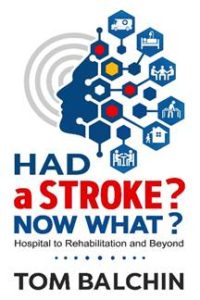 Whether you had your stroke a week or 20 years ago, this seriously practical book reveals everything you need to know about for real-life, evidence-based long-term recovery from limitations caused by stroke, that you can actually understand, use and apply successfully for yourself. With 244 pages of new information and material, it’s stacked with revelations for you based on the neuro-rehabilitation evidence-base.
The ARNI Blog

-
-
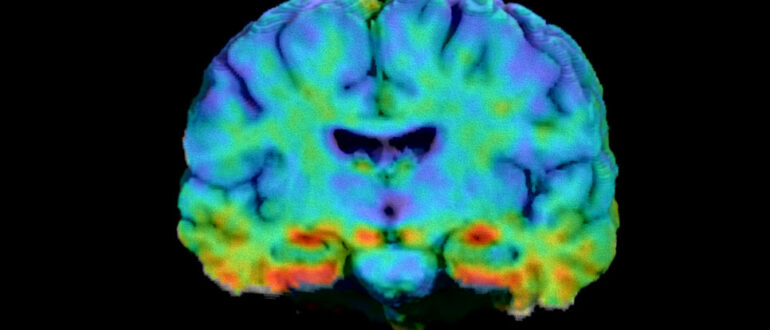
The Undamaged Side of the Brain Isn’t Passive After Stroke
March 26, 2026
-
New Wireless Implant Could End Back Pain After Stroke
March 22, 2026
-
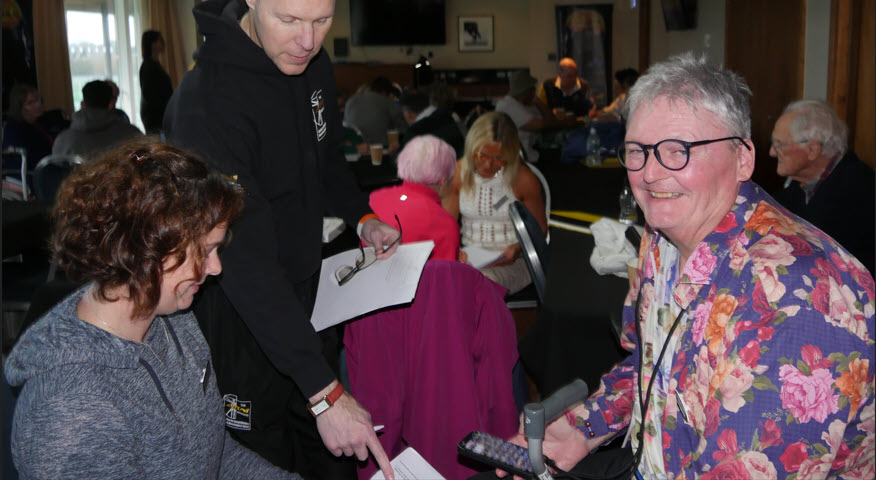
Measuring Stroke Progress at ARNI After Hospital And Beyond
March 20, 2026
View Comments
Likes:
50
Shares:
31
Comments:
61