
Stroke recovery research has long focused on what the damaged brain can no longer do. A study published in The Lancet Digital Health by scientists at the USC Mark and Mary Stevens Neuroimaging and Informatics Institute (Stevens INI) shifts that focus considerably – finding that the undamaged side of the brain may actively reorganise itself after stroke, showing signs of ‘younger’ biological structure as it adapts to injury… and the implications for how we understand neuroplasticity and rehabilitation are meaningful.
The research is part of the ENIGMA Stroke Recovery Working Group, a global collab led by Dr. Hosung Kim, Professor of Research Neurology at the Keck School of Medicine of USC, and Dr. Sook-Lei Liew at the Stevens INI at the USC Viterbi School of Engineering. The dataset analysed brain scans from more than 500 stroke survivors across 34 research sites in eight countries, building what is described as the world’s largest stroke neuroimaging dataset of its kind. That scale matters enormously – the subtle patterns this study identified would simply not be detectable in the smaller, single-site studies that have historically dominated stroke neuroimaging research.
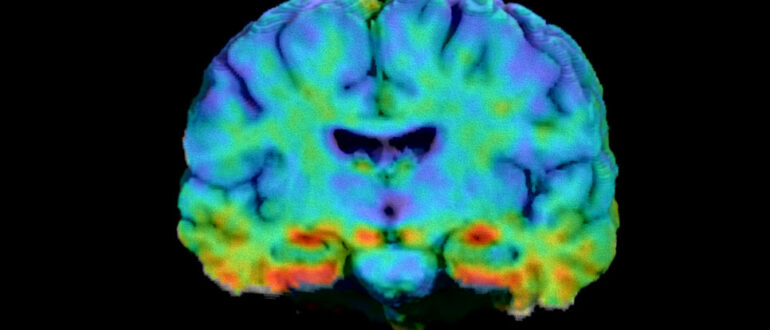
The analytical method at the heart of the study is worth understanding. The team used a graph convolutional network – which is basically an advanced form of AI, trained on tens of thousands of MRI scans …to estimate the biological age of 18 distinct brain regions in each hemisphere. The difference between a person’s predicted brain age and their actual chronological age is known as the brain-predicted age difference (brain-PAD), and it functions as a sensitive marker of neural health. An older-appearing brain-PAD has previously been associated with Alzheimer’s disease, traumatic brain injury and major depression, while a younger-appearing brain-PAD suggests preserved structural integrity. And, what made this study striking was what happened on the undamaged side…
In survivors with the most severe movement deficits – even after six or more months of rehabilitation – the damaged hemisphere showed accelerated ageing consistent with the scale of the lesion, as you’d expect. But the opposite hemisphere, particularly within the contralesional frontoparietal network, showed a paradoxically younger-than-expected brain age. The frontoparietal network is known to support motor planning, attention and coordination; it’s not the primary motor system but it plays a critical compensatory role when the primary motor pathways are damaged. As Dr Kim explained, rather than indicating full recovery of movement, this younger pattern likely reflects the brain’s attempt to adjust when the damaged motor system can no longer function normally… and that distinction is clinically important because it means the pattern is a marker of compensation rather than recovery, which has direct implications for how rehabilitation targets should be set.
Dr Liew noted a paradoxical finding; that the contralesional rejuvenation effect was strongest in the most severely impaired survivors, suggesting that the greater the demand placed on the intact hemisphere by severe ipsilesional damage, the more structurally ‘youthful’ those compensatory regions appear. This is btw, consistent with use-dependent plasticity (where regions under higher functional demand maintain or enhance their structural integrity). Professor Arthur W. Toga PhD, director of the Stevens INI, added that pooling worldwide data and applying AI allows detection of patterns invisible in smaller studies, and that these findings could eventually guide personalised rehabilitation strategies. For now brain-PAD remains a research tool, and translating it into routine NHS practice requires replication and NICE review – a process measured in years rather than months. But the message is clear; the brain after stroke is not passively awaiting recovery.. it’s actively reorganising – and understanding that process more precisely is likely to be one of the threads in stroke rehab research over the next decade.